Over the last few years, the ESC has been advocating for greater gender equity in cardiovascular health and within the cardiology profession itself. While awareness of the issues is increasing, there remains a need for wide-reaching strategies to achieve a fair deal for women.
Despite clear evidence highlighting that CVD is the leading cause of death among women worldwide, significant disparities between men and women persist in diagnosis, treatment and research representation.
“We must put sex and gender considerations right at the top of decision-making about cardiovascular health,” says Professor David Adlam, one of the ESC representatives at a recent European Parliament event. He continues, “Doing this will require us to proactively influence policy making and research funding to focus on specific aspects of CVD prevention, early diagnosis, operative, procedural and medical care.” The ESC representatives called for urgent actions to close the gaps by integrating a gender and sex dimension into the EU Safe Hearts Plan and by reinforcing the EU Gender Equality Strategy. Key recommendations included improving medical training and guidelines to address specific risks, enhancing early detection and screening, investing in research and disaggregated data, and promoting awareness campaigns to educate both women and healthcare professionals
As noted in a consensus statement from four ESC Associations, establishing dedicated women's heart centres may help address disparities [1]. Functioning as integrated reference hubs embedded in existing systems, women's heart centres can play a central role in consolidating expertise, developing and standardising clinical pathways, and disseminating best practices. In addition, dedicated centres may facilitate equitable participation in trials and registries, and further accelerate research by generating specific outcomes data. Having conducted a survey to map cardiovascular care in women across ESC Countries, the ESC Gender Task Force is preparing a Women Heart Health programme aimed at providing practical resources to support the creation of these centres. Another initiative from the ESC Gender Task Force is the creation of a new topic entitled ‘Sex & Gender in CV Health’ in the ESC topic list to better identify and highlight content and research in the field at congresses and from other outputs.
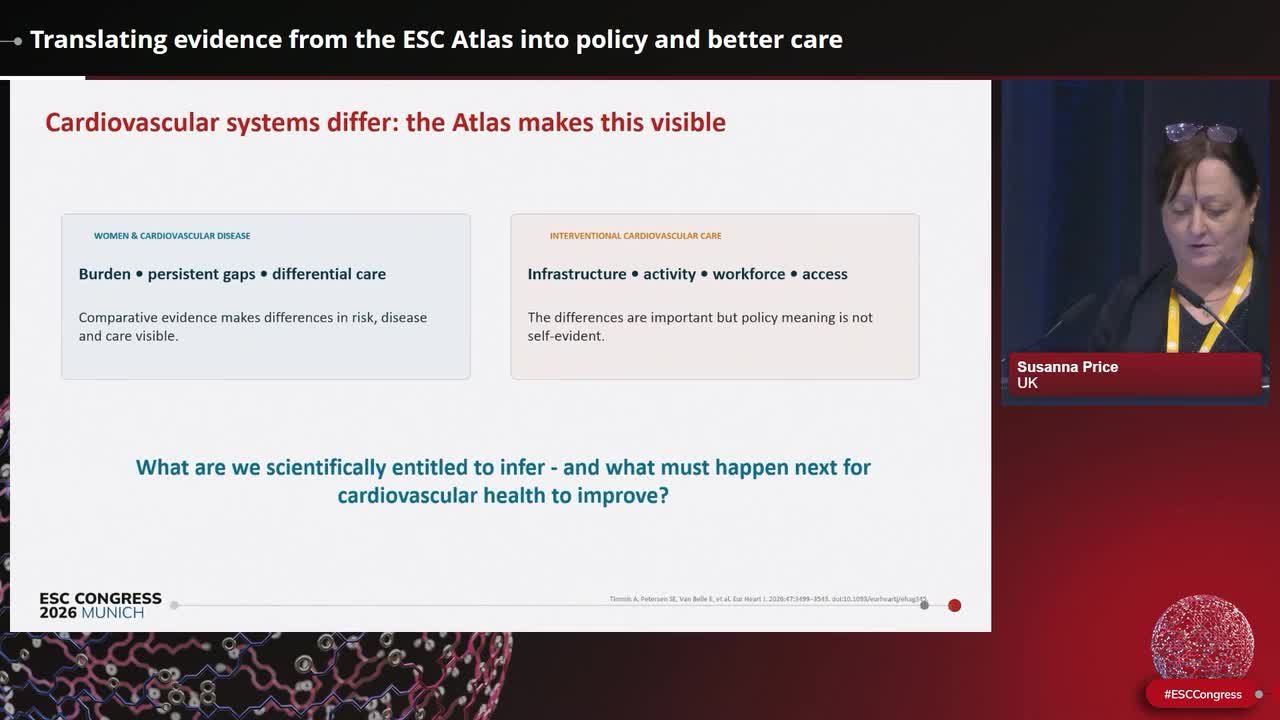
The latest ESC Atlas of Cardiology report highlights differences in many of the variables studied and also illustrates how disparities extend beyond patient care into the profession itself [2]. According to 2025 statistics, around 40% of cardiologists were women, yet only 11.5% of interventional cardiologists were women, with even fewer in cardiac surgery (8.8%)
Related to equity within the ESC, a report was recently published by the ESC Gender Task Force [3]. Its Chair, Associate Professor Maria Rubini Gimenez, explains, “We wanted to monitor the progress made since the ESC Gender Policy was adopted in 2022 and importantly, assess where further actions are necessary.” She notes that representation within the ESC Community has increased from 2022 to 2025, particularly with regards to congress faculty, but participation remains uneven. Although more women were involved in Working Groups, Associations and National Cardiac Societies than previously, women only occupied 33% of ESC leadership roles, accounted for 21% of Fellows of the ESC and held 24% of ESC journal editorial board roles. “Progress is clearly being made, but we need to understand why women remain underrepresented in certain positions so we can overcome these barriers,” says Associate Prof. Rubini Gimenez, who continues, “In addition to regular monitoring and forums for discussion, a leadership programme is in development.” She highlights the continued partnership with Women As One, including the RISE @ ESC Congress event held on Thursday, which aimed to empower women through leadership education, mentorship and focused career development.
“It is important that our research, publications, guidelines and other activities reflect the patients they serve, not just so we can talk about representation but because inclusion leads to better outcomes. We will continue to instigate tailored actions to ensure everyone has a voice within the ESC,” she concludes.