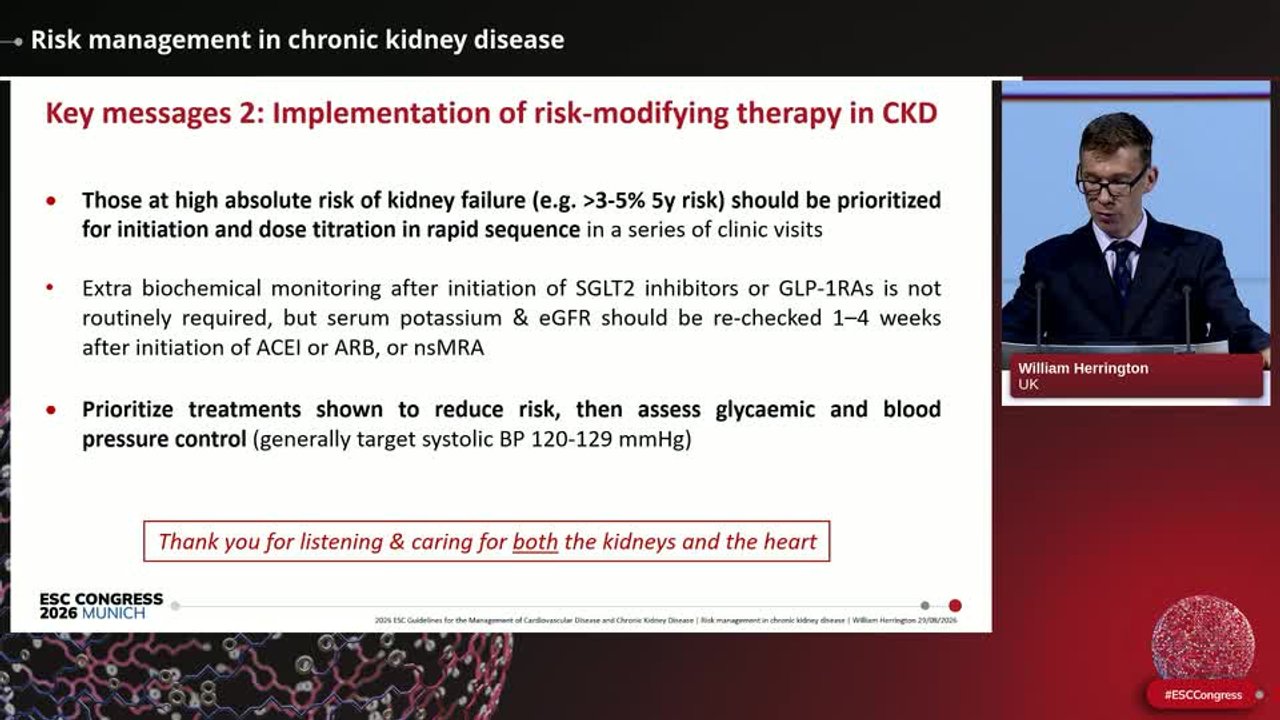
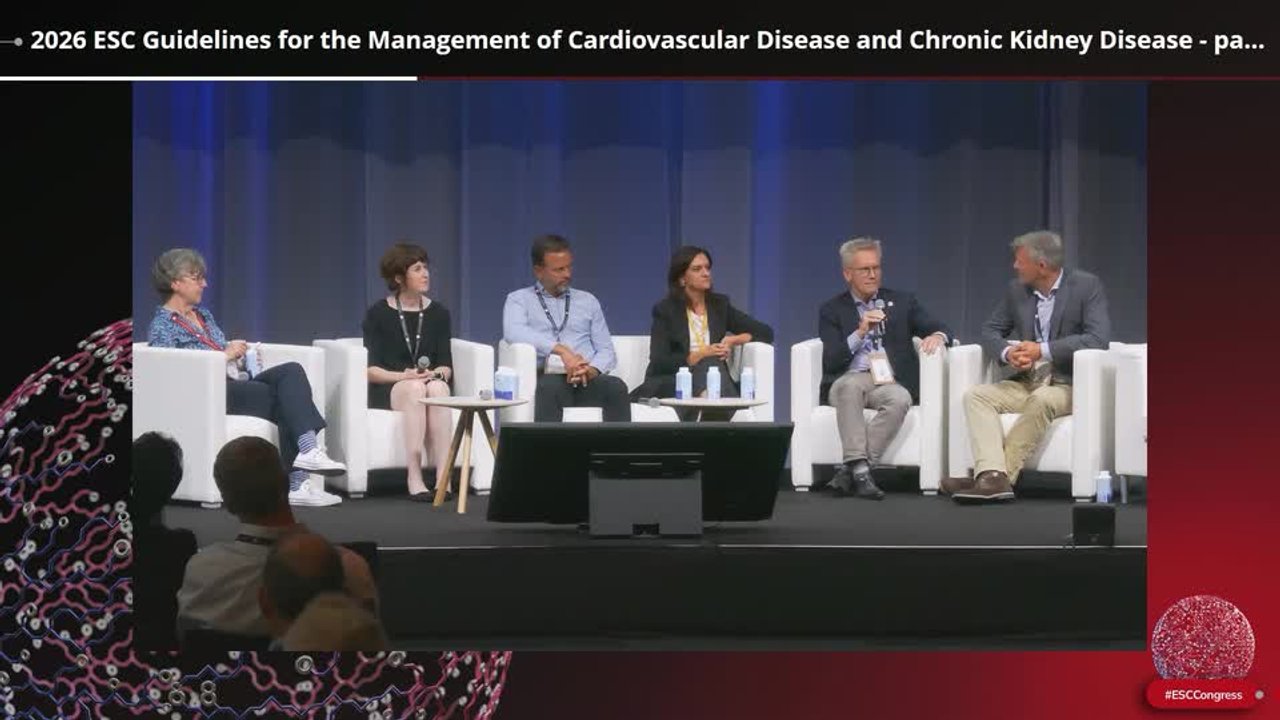
Yesterday, Task Force Chairs, Associate Professor Kevin Damman (University Medical Centre Groningen - Netherlands) and Professor William Herrington (University of Oxford - UK) presented the first ESC Guidelines on cardiovascular disease (CVD) and chronic kidney disease (CKD), in collaboration with the European Renal Association.[1]
But why now? “Results from recent major trials in CVD and CKD demonstrate that it is possible to reduce the risk of kidney and CV complications substantially,” explains Associate Prof. Damman. “However, for this to translate into a reduced global burden, active engagement is required by all clinicians to identify CKD and treat it early.” To provide the foundations for a more consistent clinical approach, the Task Force considered prevention, diagnosis and treatment of CKD, across a wide range of CVDs, emphasising where CKD necessitates changes to standard practice. “The guidelines are primarily written for the cardiology community, but they are relevant to all members of clinical teams who care for patients with CVD and CKD,” notes Prof. Herrington.
The Task Force developed the STAMP on CKD acronym: Screen, Triage, Address CKD Risk, Modify CVD management and Plan health services. The first step is screening using measurements of both eGFR and albuminuria in all patients with CVD, including those with hypertension, CAD, HF, PAD and stroke. Two measurements of eGFR and uACR over at least 3 months are recommended to establish chronicity.
A key message on triage is that CVD risk scores that include eGFR and/or albuminuria should be used to establish accurate CVD risk in patients with CKD. Addressing risk means ensuring the appropriate early use of risk-modifying therapies in patients with CVD and CKD. An ACE inhibitor or ARB and an SGLT2 inhibitor are recommended for most patients with CKD to reduce the risk of CKD progression and CVD. Non-steroidal MRA (finerenone) and GLP-1RA (semaglutide) therapy are recommended for those with CKD with type 2 diabetes and albuminuria to reduce the risk of CKD progression and CV events.
The guidelines highlight key areas where modifications to CVD management are needed due to decreased eGFR, for example, ensuring an individualised approach to diagnostic coronary imaging and DAPT in CCS and ACS. Finally, planning health services ensures that services are set up to recognise high-risk patients and expedite access to appropriate care. “Active and efficient cross-speciality communication is often necessary to deal with the complexities associated with CKD,” conclude Prof. Herrington and Associate Prof. Damman. “Engagement of patients and family/caregivers in the multidisciplinary care process will also help ensure patients’ priorities are met, improve their experience and promote patient-centred care.”
Want to know more? The 2026 ESC Guidelines are now published in the European Heart Journal and a patient version can be found here.