


ESC Atlas as a catalyst for change in Bulgaria
As cardiovascular disease continues to place a heavy burden on Bulgaria's population and healthcare system, the country's cardiology community is intensifying efforts to secure political backing for a National Cardiovascular Health Plan.
Central to this work is the ESC Atlas of Cardiology, which provides a comprehensive picture of cardiovascular health across 56 countries. By enabling comparisons of risk factors, healthcare capacity and outcomes across Europe, the Atlas has become an important advocacy tool for cardiologists seeking to inform policy decisions and drive investment in cardiovascular care.
The value of high-quality data in shaping policy is also recognised at European level. The forthcoming 2026 edition of ESC Cardiovascular Realities, due to be published in August 2026, features a foreword by European Commissioner for Health and Animal Welfare, Olivér Várhelyi, who highlights the contribution of the cardiology community in generating evidence that helped inform the development of the EU Safe Hearts Plan.
"Evidence generated through ESC research initiatives has highlighted not only the magnitude of this burden, but also its broader implications for healthcare systems, economic productivity, social cohesion and healthy ageing," Commissioner Várhelyi writes. "While progress has been achieved, important disparities remain in prevention, access to care and treatment outcomes from a geographical standpoint."
Turning evidence into action

"Our draft is quite advanced," says Professor Vassil Traykov. "We have invested several years in developing the Plan and have a working group in place. The challenge has been securing support from decision-makers during a period of political instability."
The policy context is now changing. Bulgaria has entered a period of greater political stability, while the recently adopted EU Safe Hearts Plan calls on Member States to develop National Cardiovascular Health Plans by 2027. Together, these developments are creating momentum for renewed engagement with national authorities.
A compelling case for investment
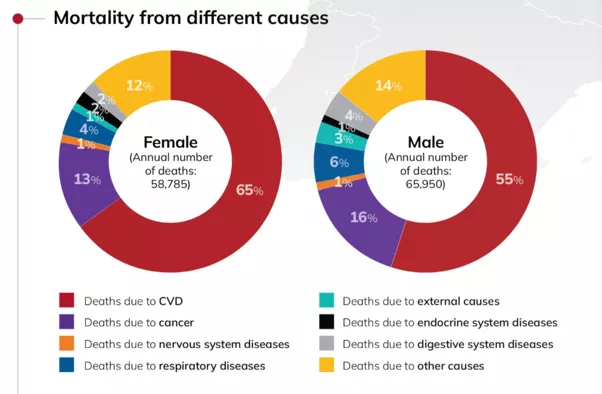
Despite progress seen in some other European countries, many of Bulgaria's cardiovascular indicators have changed little in recent years. For Prof. Traykov, this strengthens the case for a comprehensive national plan capable of guiding future investment, improving prevention and ensuring more equitable access to care.
"It is not always easy to convince policymakers about new technologies or specific interventions, but having high-quality data on our side is extremely helpful," he says. "The Atlas allows us to compare Bulgaria with neighbouring countries and identify areas where progress is both possible and necessary."
Data that support advocacy efforts in the country
Beyond measuring disease burden, the ESC Atlas also provides information on healthcare resources and capacity, including the availability of cardiologists, CT scanners, catheterisation laboratories and specialised procedures.
According to Prof. Traykov, policymakers often respond most strongly to comparisons with peer countries. Examples such as higher rates of cardiac ablation procedures in neighbouring countries help demonstrate what can be achieved through targeted investment and strategic planning. "The data are robust, easily accessible and widely used in scientific presentations and discussions with decision-makers," he explains. "They help turn abstract discussions about healthcare priorities into evidence-based policy conversations."
Ensuring the quality of these data requires close collaboration between national cardiac societies, healthcare institutions and public authorities. In Bulgaria, experts routinely cross-check information from multiple sources to ensure the most accurate picture possible.
"What we ultimately need are high-quality mandatory registries that can provide consistent and reliable data," says Prof. Traykov. "That is why initiatives such as EuroHeart are so important."
Building momentum for a national Plan focused on cardiovascular health
To support the final phase of advocacy efforts, the Bulgarian Society of Cardiology will work with the ESC and the Cardiopolicy network to raise awareness among policymakers and stakeholders of the need for a National Cardiovascular Health Plan.
"We are very grateful for the support from the ESC Cardiopolicy group, which we hope will help accelerate the process," says Prof. Traykov. "For several years, interim governments had limited capacity to take major policy decisions. Now, with greater political stability and the publication of the EU Safe Hearts Plan, there is a real sense of momentum. We hope this will finally enable Bulgaria to turn years of preparation into concrete action for cardiovascular health."