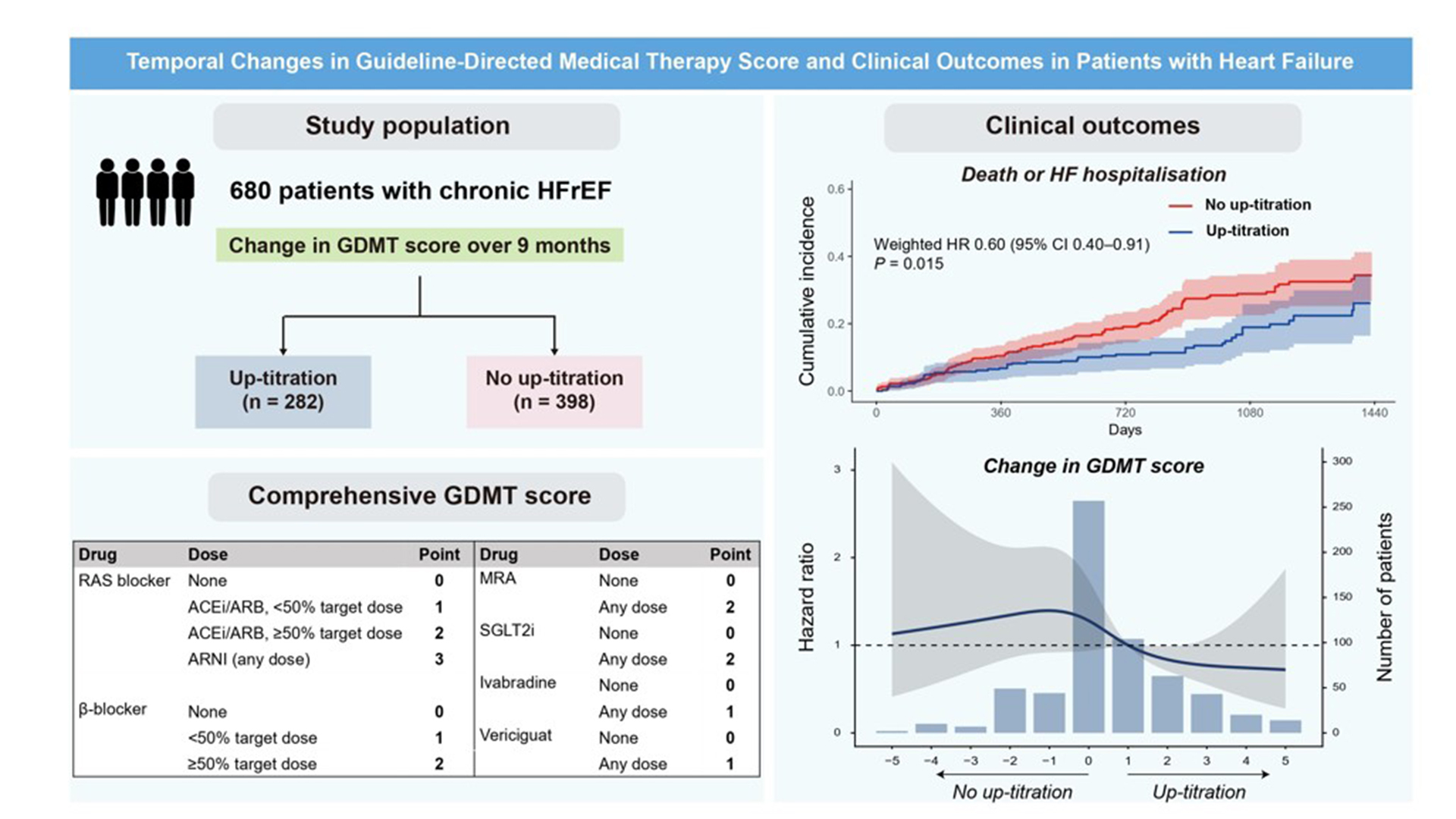
Temporal Changes in Guideline-Directed Medical Therapy Score and Clinical Outcomes in Patients with Heart Failure
European Heart Journal - Quality of Care and Clinical Outcomes
Optimisation of guideline-directed medical therapy (GDMT) is a cornerstone of heart failure (HF) management. The implementation of guideline-recommended therapies based on the results of numerous randomised trials, including the so-called "fantastic four" (renin-angiotensin system inhibitors, beta-blockers, mineralocorticoid receptor antagonists, and SGLT2 inhibitors), has been a major driver of improvements in heart failure treatment (HFT).
A GDMT score was developed to quantify both the use and intensification of GDMT. The score proposed by the authors incorporated the use and dosing of guideline-recommended therapies, including quadruple therapy, ivabradine, and vericiguat.
The authors found that the GDMT score revealed suboptimal implementation and intensification of GDMT. Greater increases in the GDMT score were associated with improved clinical outcomes.