Could the Irish Presidency of the Council of the EU be a catalyst for change?
 The first Irish recipient of the ESC Gold Medal was Micheál Martin, who as Ireland’s Minister for Health in 2004 was recognised for introducing a nationwide ban on smoking in the workplace. The pioneering measure made Ireland the first country in the world to implement such comprehensive legislation, helping to drive down smoking rates and setting a precedent for public health policy across Europe.
At ESC Congress in Munich that same year, Martin was also commended for his efforts to advance cardiovascular health policy during Ireland’s Presidency of the Council of the European Union in the first half of 2004.
 More than two decades later, Ireland is preparing to take on the Presidency once again, raising renewed expectations of progress at both national and European levels. Cardiologists in Ireland are calling for the development of a National Cardiovascular Health Plan aligned with the EU Safe Hearts Plan, as well as stronger measures to address emerging risk factors such as vaping. At the same time, European health ministers are expected to finalise a revision of the Medical Device Regulation (MDR) before the end of the year.
Micheál Martin remains at the forefront of Irish politics as Taoiseach (Prime Minister), and his legacy in public health continues to inform discussions on how bold policy decisions can improve cardiovascular outcomes.
Irish Cardiac Society prioritising prevention and more equitable care
Ireland’s six-month Presidency offers a key opportunity to accelerate progress in cardiovascular care. For the Irish Cardiac Society (ICS), an all-island organisation representing members in Ireland and Northern Ireland, the immediate priority is securing political commitment to a National Cardiovascular Health Plan.
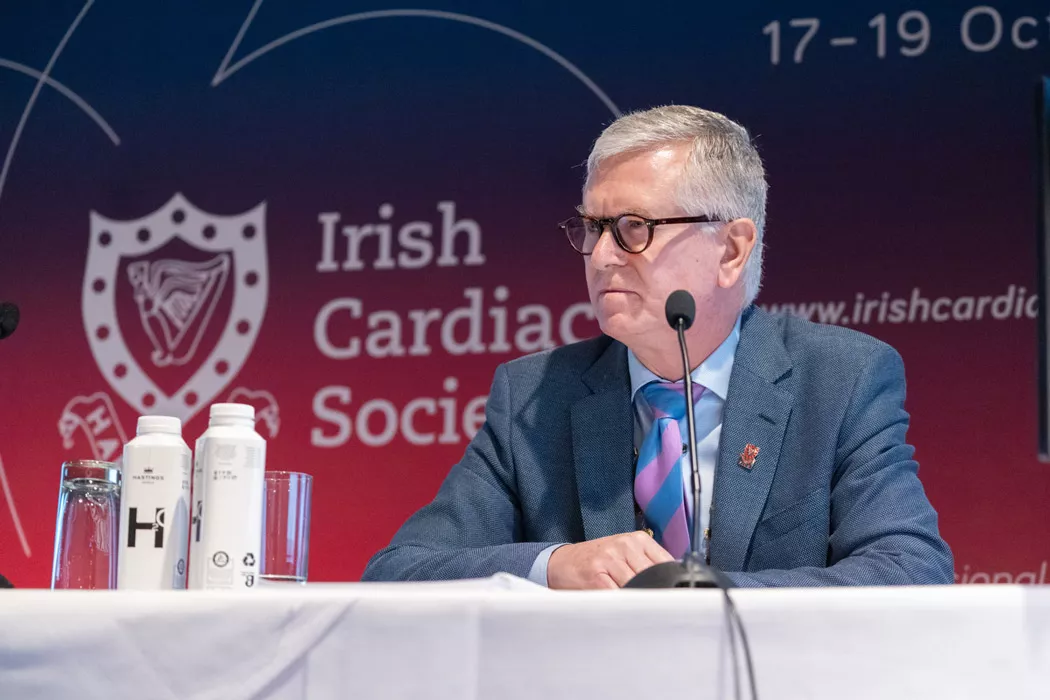
Professor Brendan McAdam, President of the ICS, has emphasised the importance of strengthening prevention, improving access to advanced cardiac imaging, and ensuring timely access to diagnostics and innovative therapies for cardiovascular disease (CVD) and stroke. Addressing gender and social inequalities in care is also a central concern.
A comprehensive review of cardiac services, initiated in 2018 and published in 2025, identified key gaps in prevention, imaging capacity, and long waiting times for diagnostic procedures. In response, the ICS is working closely with national partners, including the Faculty of Radiology, to enhance screening and reduce pressure on emergency departments.
Looking ahead to the Presidency, the Society sees an important window for political action. Discussions with national authorities have raised hopes that dedicated funding could be allocated to a national cardiovascular strategy. Strengthening cross-border collaboration - such as the successful primary PCI service linking Derry and Donegal - also illustrates the potential for more integrated approaches to care.
The ICS is advocating for a model similar to Ireland’s National Cancer Strategy, with ring-fenced funding and a clear framework for prevention, screening, and treatment. Such an approach would help address disparities in access to care and ensure more consistent patient outcomes across the country.

Ireland’s experience with tobacco control demonstrates the impact of decisive public health policy. While smoking rates have declined since 2004, the rise in vaping - particularly among younger people - presents new challenges. The ICS is calling for stronger legislation and greater awareness of the potential harms associated with vaping.
At the same time, broader lifestyle-related risk factors, including obesity, continue to contribute to cardiovascular disease, often in younger populations. Strengthening health promotion and improving awareness of early symptoms remain critical priorities.
With preparations underway for its Annual Meeting in October and a high-level Ministerial Conference in Dublin in November, the Irish Cardiac Society is positioning itself to play a central role in shaping the cardiovascular policy agenda during the Presidency.


