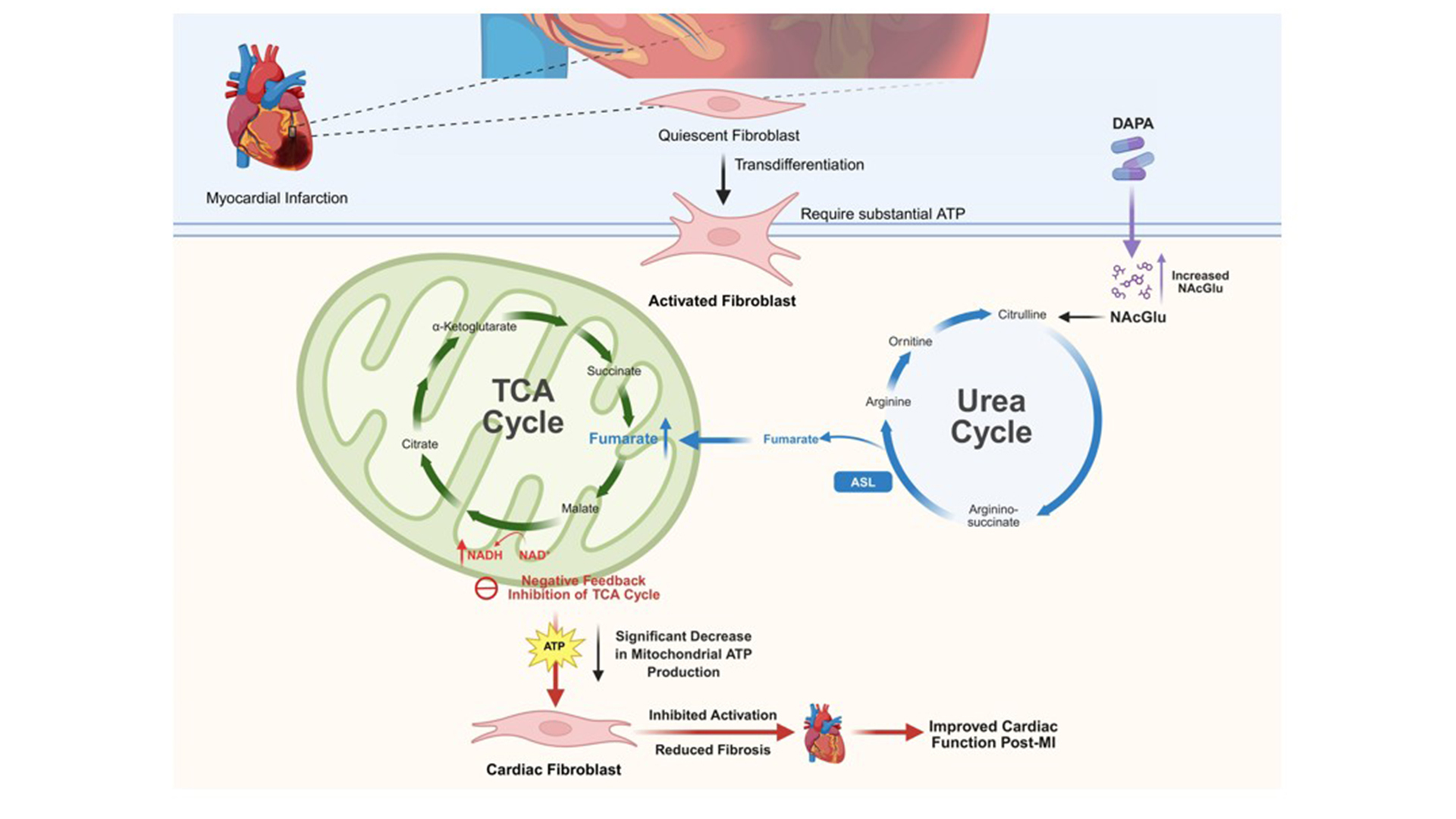
Urea cycle fumarate limits fibrosis post-myocardial infarction by reducing fibroblast mitochondrial adenosine triphosphate production
European Heart Journal
Cardiac fibrosis is a common consequence of myocardial infarction and is driven by the activation of cardiac fibroblasts. SGLT2 inhibition was shown to reduce fibrosis by altering fibroblast metabolism.
Multi-omics analyses identified the NAcGlu/ASL/fumarate pathway as a key regulator linking the urea cycle and the TCA cycle. Supplementation with NAcGlu or fumarate improved cardiac function and reduced fibrosis, whereas deletion of ASL worsened outcomes.
These findings suggest that targeting fibroblast metabolism may offer a new strategy to prevent adverse cardiac remodelling after MI. Read the full paper for detailed mechanistic insights.