2025 Focused Update of the 2019 ESC/EAS Guidelines for the management of dyslipidaemias
This 2025 Focused Update addresses changes in recommendations for the treatment of dyslipidaemias based on new evidence published since the 2019 version, up until 31 March 2025.
The Task Force also considered and discussed: combination therapy with high-dose statin plus ezetimibe and intensification of lipid-lowering therapy during the index hospitalisation for patients presenting with acute coronary syndrome (ACS), as well as new data on lipoprotein(a) [Lp(a)] as a risk modifier.
Only results that would lead to new or changed Class I/IIa or Class III recommendations were selected for inclusion in Recommendation Tables.
Copyright permission
Guidelines and related materials are for use by individuals for personal or educational purposes. No commercial use is allowed. Re-use permission must be correctly obtained from the publisher ESC Guidelines are protected by copyright. As per opt out option under Article 4 §3 of EU Directive 2019/790, the ESC reserves all rights to license uses of ESC Guidelines to train or develop generative artificial intelligence (AI) models, large language models or other deep learning or machine learning models. Any use of ESC Guidelines in software tools, generative AI models, computational models, or algorithms in which ESC Guideline content is included, cited, or transformed in any way requires a formal license agreement.
ESC Chat - Your Guidelines Companion

ESC Chat provides instant and personalised answers to clinical queries, based exclusively on current ESC Clinical Practice Guidelines.
Educational resources
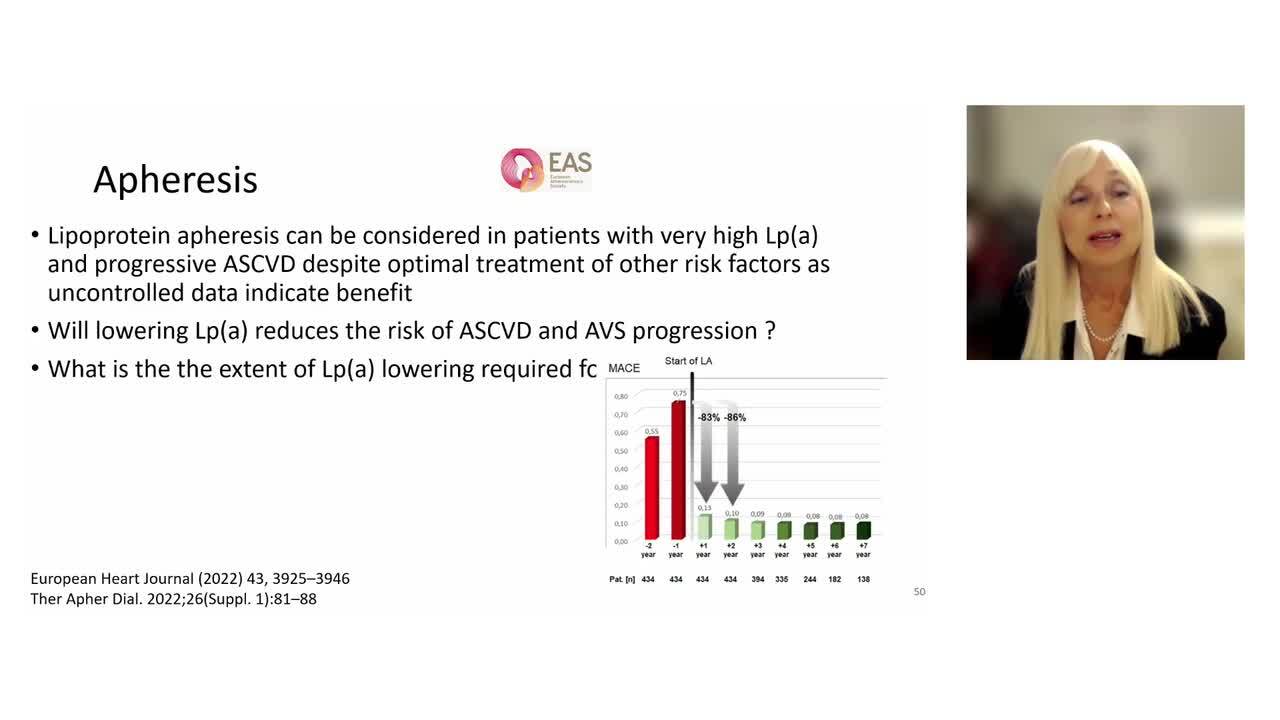
Update on dyslipidaemia management: focus on risk estimation and lipoprotein(a)
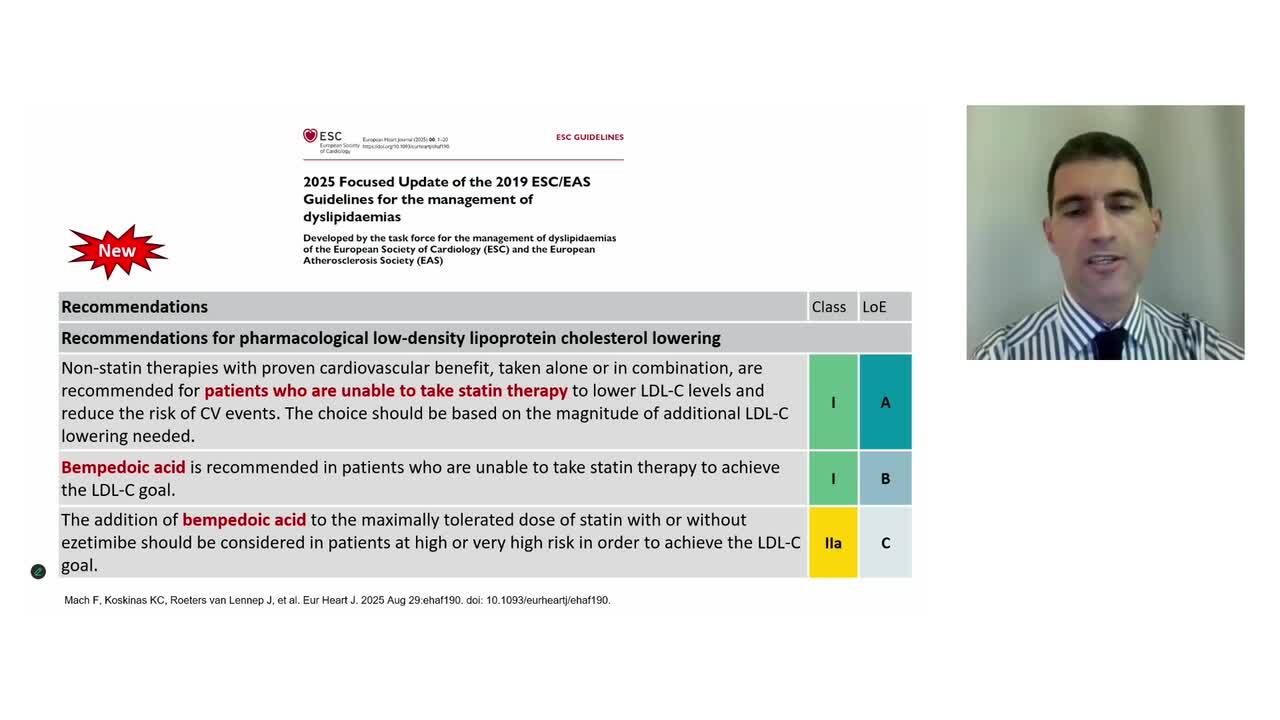
Update on dyslipidaemia management: focus on LDL-C and triglyceride-lowering therapies
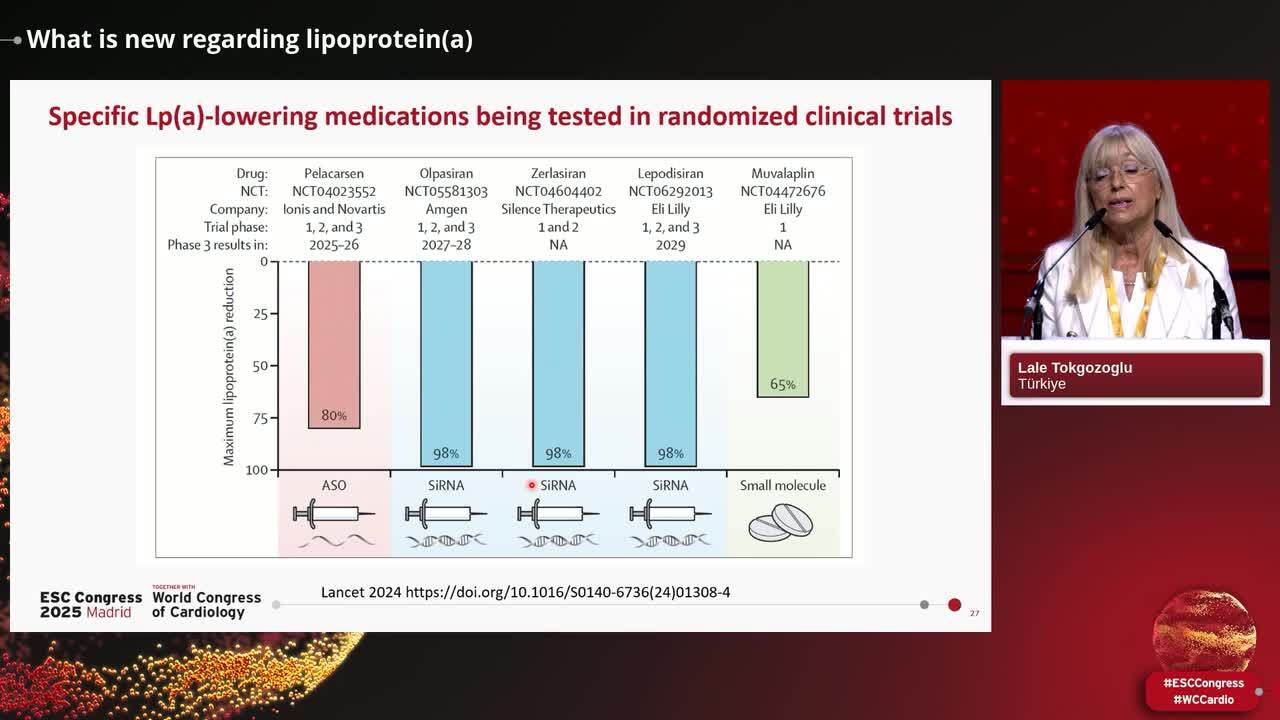
2025 Focused Update of the 2019 ESC/EAS Guidelines for the Management of Dyslipidaemias
More Resources
Patient versions of ESC Guidelines
Based on our guidelines, these documents explain diagnosis and treatment recommendations backed by evidence. They help patients understand their condition, engage in shared decisions, and adopt self-care strategies essential for effective disease management.
ESC Pocket Guidelines Mobile App
Convenient resources available directly on your mobile device.