2024 ESC Guidelines for the management of chronic coronary syndromes
These guidelines recommend using a risk factor-weighted clinical likelihood model to estimate the most up-to-date clinical likelihood of obstructive coronary artery disease (CAD). Compared to the basic 2019 ESC pre-test probability model, incorporating risk factors into the pre-test likelihood model (which considers age, sex, and symptoms) enhances the prediction of obstructive CAD. This approach reclassifies more individuals into the very low and low likelihood categories, where further testing may be unnecessary. An updated diagnostic algorithm is provided for patients with moderate or high pre-test likelihood. The Guidelines also include an expanded section on diagnosing and treating patients with angina and no or nonobstructive coronary artery disease, now termed ANOCA-INOCA. The treatment section offers guidance on anti-anginal/anti-ischaemic medications and various event-preventing therapies. It also covers strategies to improve adherence to medical treatment and prescribed lifestyle changes. Additionally, the guidelines review indications for and selection of the optimal revascularisation modality based on findings from large RCTs and IPDAs. Lastly, options for managing recurrent or refractory angina/ischaemia are discussed.
Copyright permission
Guidelines and related materials are for use by individuals for personal or educational purposes. No commercial use is allowed. Re-use permission must be correctly obtained from the publisher ESC Guidelines are protected by copyright. As per opt out option under Article 4 §3 of EU Directive 2019/790, the ESC reserves all rights to license uses of ESC Guidelines to train or develop generative artificial intelligence (AI) models, large language models or other deep learning or machine learning models. Any use of ESC Guidelines in software tools, generative AI models, computational models, or algorithms in which ESC Guideline content is included, cited, or transformed in any way requires a formal license agreement.
ESC Chat - Your Guidelines Companion

ESC Chat provides instant and personalised answers to clinical queries, based exclusively on current ESC Clinical Practice Guidelines.
Educational material
Chronic coronary syndrome post-myocardial infarction: disease progression and comorbidities
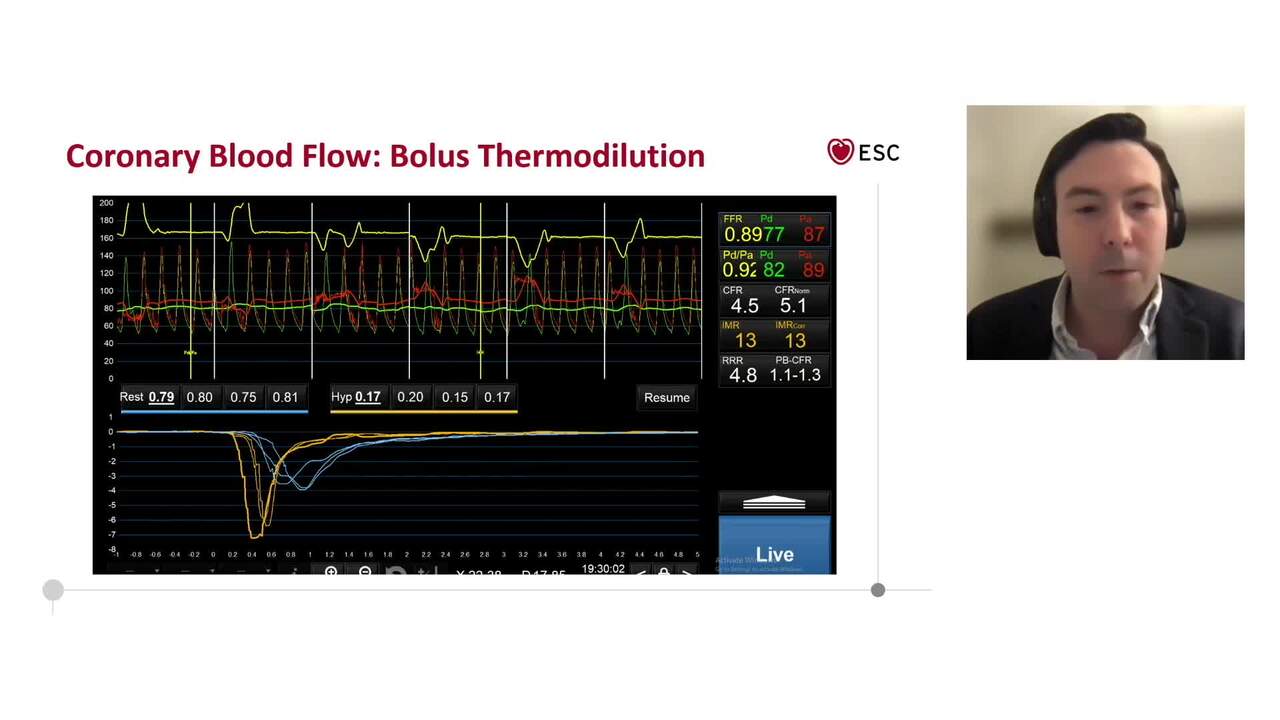
Angina/ischaemia with non-obstructive coronary arteries (ANOCA/INOCA)
The 2024 ESC Guidelines for Management of Chronic Coronary Syndromes
Tools
Slide Set
Educational material.
ESC Pocket Guidelines Mobile App
Convenient resources available directly on your mobile device.
Patient versions of ESC Guidelines
ESC Patient Guidelines translate expert clinical recommendations into clear, everyday language.
Task Force members


Doctor Francisco Javier Rossello
Xavier Rossello