


Sustainability
Tackling pollution to safeguard heart health
Towards a sustainable future, together
The ESC is committed to tackling air pollution
Air pollution is a major contributor to cardiovascular disease (CVD), claiming lives at a rate nearly comparable to smoking when measured in life years lost.
Long-term exposure to fine particulate matter (PM2.5) significantly increases the risk of heart disease and stroke. Yet, across Europe, PM2.5 levels remain around 2.5 times higher than the World Health Organization’s recommended limits.
At the European Society of Cardiology, we are committed to tackling this challenge. We work closely with international organisations and European Union (EU) institutions to drive meaningful change, and we have also established a dedicated task force to raise awareness, inform policy and implement sustainable practices – both within our organisation and across the global cardiovascular community.
The ESC has reached a major milestone in global cardiovascular advocacy. Together with the American College of Cardiology, the American Heart Association, and the World Heart Federation, we have published a landmark scientific statement: “Environmental stressors and cardiovascular health”. This joint paper highlights how factors such as air pollution, noise, chemical exposure, and climate change now rival traditional cardiovascular risk factors, contributing to millions of deaths worldwide. It calls for urgent action—through policy, research, education, sustainable healthcare, and climate-resilient systems—to protect heart health and the planet. This initiative underscores ESC’s commitment to sustainability and leadership in shaping a healthier future for all.
These improvements demonstrate the power of collective action and the tangible benefits of prioritising heart and environmental health – something that we are deeply proud to champion and share with our community.
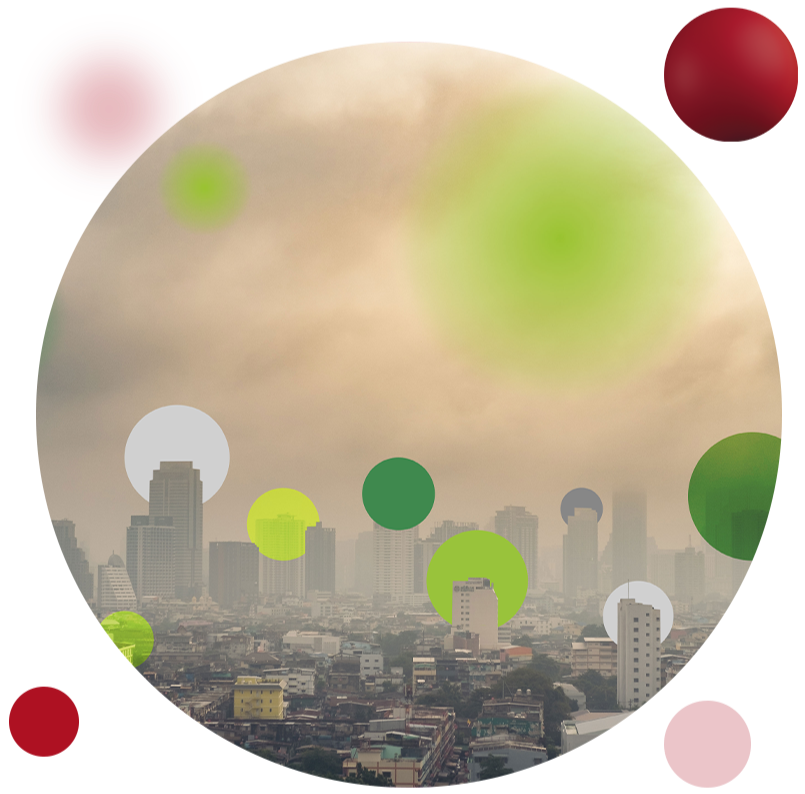
Environmental risk factors
Building healthier, more resilient communities

Air pollution, climate change and exposure to harmful substances are no longer distant concerns – they are recognised drivers of CVD.
From the fine particles in the air we breathe to the stress of extreme heat or disruptive noise, these environmental factors affect heart health for people on a global scale. Tackling these risks is essential not only to reduce the global burden of CVD but also to build healthier, more resilient communities where everyone can thrive.
Looking ahead, we will continue to expand knowledge and take action through initiatives like the EU-funded project ‘Cities at Heart’, which will explore how our urban environments can be transformed to safeguard cardiovascular health for all.
Discover our latest resources
Our commitment: The ESC Task Force on Environmental Sustainability
Working together to protect the heart and the planet
We established the Task Force on Environmental Sustainability in 2024 to put environmental health at the heart of cardiology.
This multidisciplinary team brings together cardiologists, prevention specialists, environmental scientists and public health advocates to work collaboratively on solutions that protect both the heart and the planet.
As highlighted in our Cardiopulse article, ‘Championing Environmental Sustainability in Cardiology,’ the Task Force is a call to action – bridging science, advocacy and collaboration to create healthier communities for all

Advocacy: Driving change through collective action
Helping to shape the global agenda

We know this is not a challenge that we can solve alone.
That is why collaboration lies at the heart of our approach and, together with our partners, we are helping to shape the global agenda where climate, the environment and heart health meet.
Our objectives:
- Advocate for more research on the environmental drivers of CVD.
- Engage policymakers to adopt environmental strategies.
- Build strong alliances with leading organisations, including the World Health Organization (WHO), European Environment Agency (EEA), American Heart Association (AHA), American College of Cardiology (ACC) and World Heart Federation (WHF).
- Raise visibility through initiatives such as the "Environment and the heart" in the European Heart Journal.
Through united efforts and advocacy, we can turn shared knowledge and collaboration into meaningful action that protects both heart health and the environment for generations to come.