


Prevention
Early action, lasting heart health
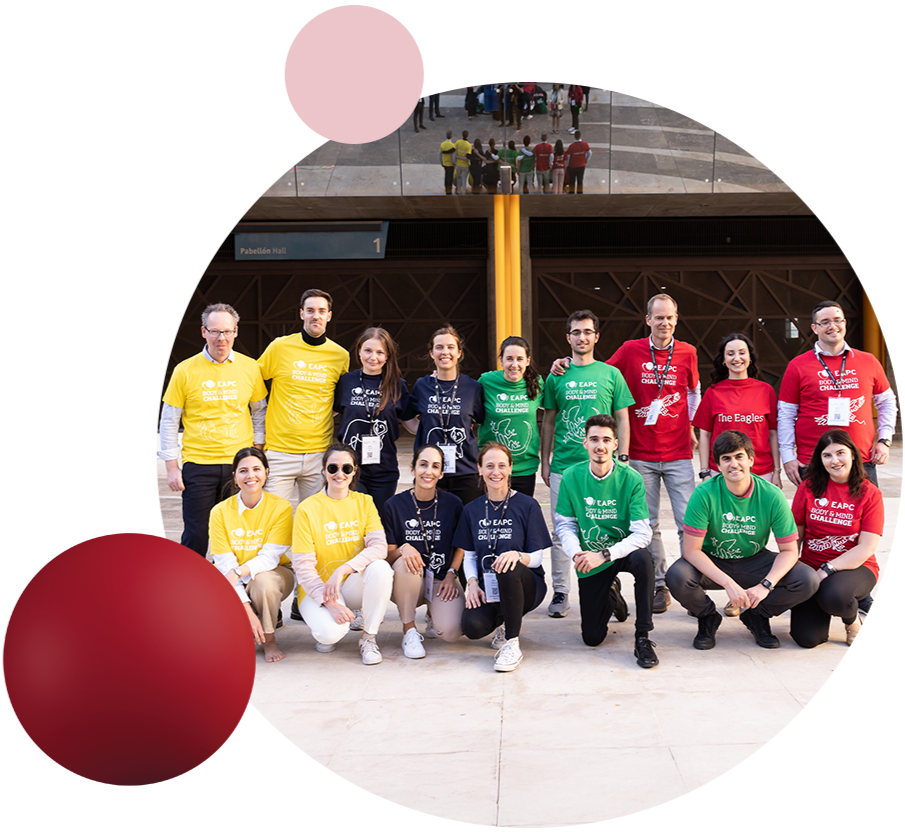
Preventing cardiovascular disease together
Primary prevention

It is estimated that 50% of cardiovascular diseases (CVD) could be prevented.
Early detection, proactive cardiovascular health checks, increased awareness and education, and the effective management of key risk factors, such as high blood pressure, cholesterol, diabetes, obesity and smoking, all play a crucial role in helping people take charge of their heart health.
Despite these opportunities, risk factors remain highly prevalent across the EU population. This shows that we must do more, and do it collectively, to ensure that everyone, regardless of where they live or their background, has the tools and support to live a healthy life.
We need bold, evidence-based policies and regulations to protect communities. The EU has a strong history of implementing public health initiatives, and renewed investment in primary prevention can empower young people, reduce preventable disease and reshape the way we experience ageing and health.
The European Society of Cardiology is fully committed to promoting healthier populations through prevention-first strategies and early risk detection. We actively engage in policy discussions at the EU level and have responded to the European Commission’s call for evidence on the Cardiovascular Health Plan, advocating for the inclusion of measures such as vaccination and environmental risk reduction as part of broader health promotion and prevention strategies.
Advancing effective tobacco control policies
Tobacco products, including vapes, are a catastrophic global health burden.
- Tobacco use accounted for 7.7 million deaths annually, or 13.6% of all global deaths.2
- In 2021, smoking alone was responsible for approximately 2.25 million CVD deaths globally, mainly from ischemic heart disease and stroke, confirming CVD as one of the leading pathways of tobacco-attributable mortality.4
In Europe alone:
- Tobacco use is responsible for about 1.2 million deaths every year, accounting for 18% of all noncommunicable disease (NCD) deaths in the WHO European Region. Among these, approximately one quarter of cardiovascular deaths in men and around 8% in women are attributable to tobacco use.5
- The economic cost of smoking in Europe, including healthcare expenditures, productivity loss and premature mortality, exceeds €300 billion annually.5


Regulating nicotine is essential for reducing cardiovascular disease
It is not only traditional cigarettes and tobacco products that pose a risk to heart health – no nicotine-containing product is truly safe. Nicotine damages the cardiovascular system in measurable ways and acts as a direct, biologically active cardiovascular toxin. This is why regulating nicotine, not just tobacco, is essential for reducing the burden of cardiovascular disease across populations.
It is often argued that vaping is a helpful tool for smoking cessation. This is not a view that we support, as evidence demonstrates that e-cigarettes are not replacing traditional cigarettes but are instead attracting new users:
- Up to 40% of European adolescents have tried e-cigarettes, and dual use with cigarettes is now common.
- 75% of young adult e-cigarette users (18-20) have never smoked traditional cigarettes.
To protect young people and reduce cardiovascular risk, we call on policymakers to implement stronger regulations on all nicotine products.

"Scientific evidence unequivocally demonstrates that vaping poses significant health risks. To protect European children and adolescents from a potential epidemic of addiction, we are calling on policymakers to implement stringent regulations on e-cigarettes or consider banning them altogether."
Professor Susanna Price
Advocacy Committee Chair 2024-2026
Cardiovascular health checks
The importance of early detection
Evidence shows that early detection through screening programmes can have a profound impact on CVD outcomes:
- It enables early diagnosis and prevention of CVD.
- It helps clinicians support patients in taking a proactive approach to their heart health.
People with type 2 diabetes mellitus are particularly at risk, facing a 2–3 times higher risk than those without diabetes, and a reduction in life expectancy of 10–14 years. By identifying people with type 2 diabetes mellitus, we are significantly better placed to prevent or manage their risk of CVD.
Introducing a joint diabetes and cardiovascular health check has strong potential as an effective strategy for improving heart health at both national and European levels. For this reason, we are calling for an EU CV Health Plan that adopts an EU Council Recommendation for a cardiometabolic health check and the launch of EU-wide screening for high-risk conditions such as atrial fibrillation, heart failure and inherited cardiomyopathies.
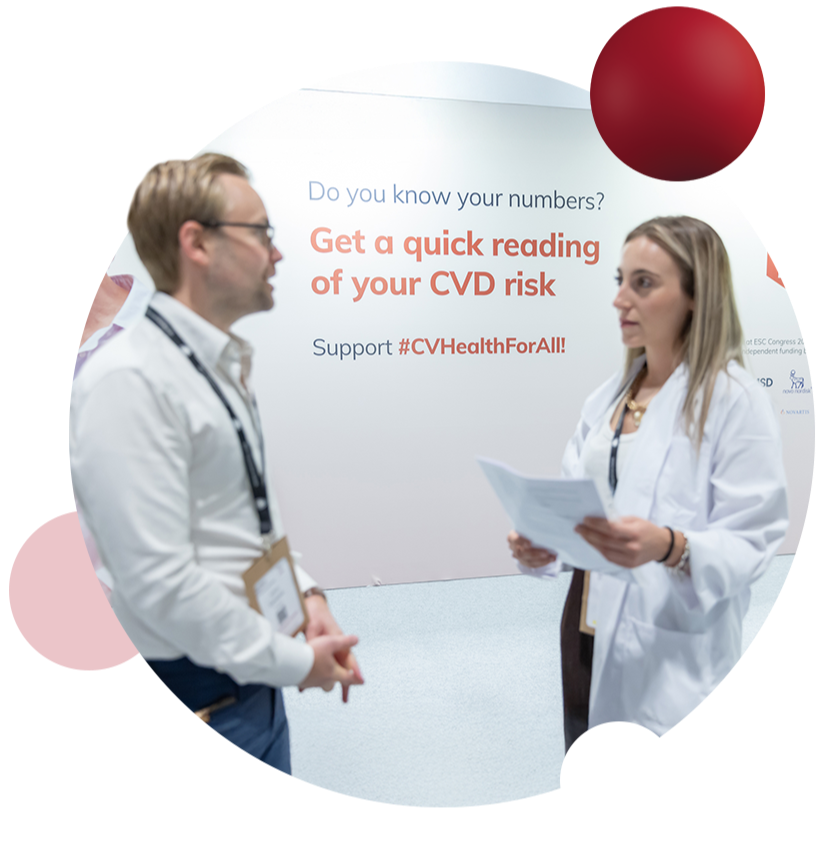
To raise awareness of the simplicity and effectiveness of early detection, we also run ‘CV Health Checks’ at our congresses. These allow healthcare professionals to experience the process firsthand, equipping them to promote similar initiatives in their own countries and encouraging policymakers and journalists to learn more.
In 2025, nearly 1,300 delegates, including the Spanish Minister for Health, Members of the European Parliament, journalists and healthcare professionals, were tested over just 3.5 days at the ESC Congress in Madrid. The data collected is being used to assess impact and will be published in ESC journals.
Secondary prevention

Secondary prevention is also critical to saving lives and improving quality of life.
Yet, the current reality shows significant gaps:
- 60–80% of heart failure cases are diagnosed in the emergency department.
- Nearly half of all cardiovascular events occur in people with established heart disease
- 25–30% of strokes are repeat events.
- 1 in 5 patients discharged from hospital after a heart attack experiences another heart attack, stroke or dies of cardiovascular disease within the first year.
In response to the EU’s call for evidence for its Cardiovascular Health Plan, we have highlighted the urgent need to strengthen cardiovascular rehabilitation. Effective rehabilitation not only reduces mortality but also supports a safe return to work and daily life while addressing psychological well-being.
Prioritising rehabilitation and ongoing support
Access to rehabilitation remains uneven. Alarmingly, the EUROASPIRE registry showed that in the six months following a heart attack, 49% of patients were not enrolled in a cardiac rehabilitation programme. As a result:
- Over 20% of patients were not prescribed heart-protective medications.
- 58% did not meet blood pressure targets.
- 71% did not achieve low-density lipoprotein (LDL) cholesterol goals.
Even beyond rehabilitation, many healthcare systems lack the resources and infrastructure to provide appropriate care for patients with end-stage heart disease or those experiencing distressing symptoms at the end of life.
Policies that prioritise rehabilitation and ongoing support after hospital discharge can significantly reduce repeat events, ease suffering and help millions of people return to the lives they wish to lead. By addressing these gaps, we can ensure that recovery is not just survival, but a path to renewed health and quality of life.

Action through the European Association for Cardiovascular Prevention
Promoting excellence in research, practice, education and policy in cardiovascular health

Within the ESC family, the European Association for Cardiovascular Prevention (EAPC) promotes excellence in research, practice, education and policy in cardiovascular health, encompassing both primary and secondary prevention.
This community not only provides education and scientific content for the cardiovascular community but also supports advocacy initiatives on important topics such as smoking and heart-healthy behaviours. They publish key statements and consensus documents and were among the first to address concerns around vaping, as well as major health challenges such as COVID-19.