Key takeaways
- The European Society of Cardiology, the American College of Cardiology, the American Heart Association and the World Heart Federation have published the first joint statement calling for urgent action to address environmental stressors as major contributors to cardiovascular disease.
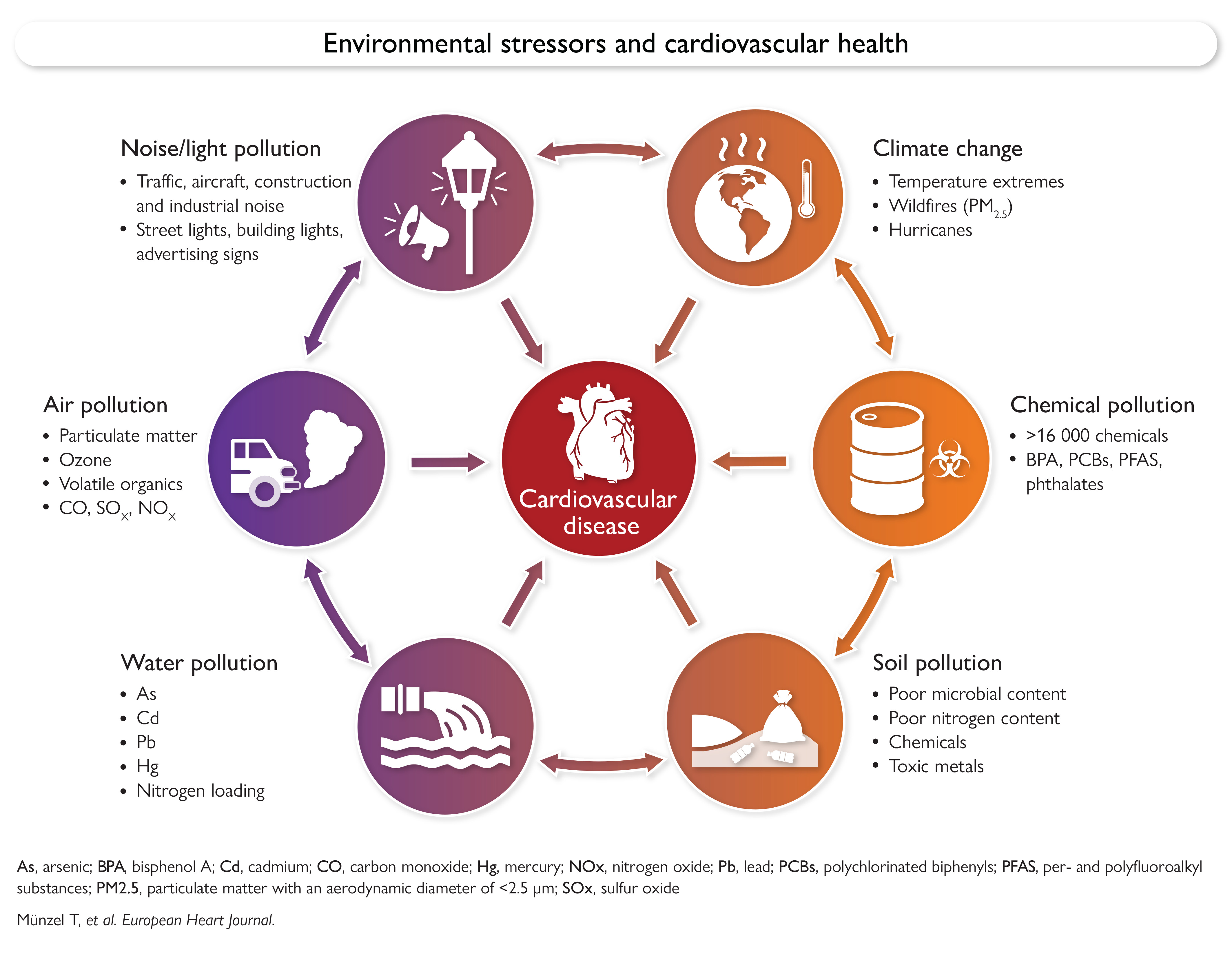
- Environmental risk factors that impact cardiovascular health include air pollution, traffic, airplane and industrial noise, artificial light exposure, chemical pollution, plastic and the various effects of climate change, such as heat extremes.
- Regulatory and policy-driven efforts are needed to minimise the impact to health, particularly in vulnerable populations who often suffer the greatest consequences.
Sophia Antipolis, France – 20 January 2026. The world’s leading cardiovascular societies, the European Society of Cardiology (ESC), the American College of Cardiology (ACC), the American Heart Association and the World Heart Federation (WHF) have today issued the first ever joint statement calling for urgent action to address environmental stressors as major, yet preventable, causes of cardiovascular disease (CVD). [1]
Environmental stressors, such as air and noise pollution, chemical and plastic contamination, and climate-related hazards contribute an estimated 4−6 million of the global total of approximately 20 million CVD deaths per year.[2,3] In other words, around one in five cardiovascular deaths worldwide are attributable to environmental exposures, exceeding the impact of many traditional cardiovascular risk factors. The joint statement represents a unified global commitment to place environmental protection at the heart of CVD prevention and policy.
“CVD remains the leading cause of death worldwide and environmental stressors have become its silent accelerators,” says lead author, Professor Thomas Münzel from the University Medical Center Mainz, Germany. “Our message is clear: cleaner air, quieter cities and a stable climate are not solely environmental goals, they are essential for heart health and for reducing the CVD burden globally.”
As Professor Thomas F. Lüscher, ESC President and senior author explains: “The heart does not exist in isolation – it beats within an ecosystem. Environmental hazards must stand alongside smoking, hypertension and diabetes in our risk assessments and prevention strategies.”
Immediate, coordinated and courageous actions from policy makers are needed to reduce personal and societal environmental risk factor exposure, particularly in low- and middle-income countries that disproportionately bear the brunt of global environmental degradation.
“Research has shown the negative health impacts of pollution, noise, rising temperatures and other environmental stressors,” says co-author and ACC President, Dr. Christopher Kramer, “The time for action on addressing the impact of the environment on cardiovascular health is now and essential to reducing the burden of cardiovascular disease around the world.”
“To treat and prevent cardiovascular diseases, we must tackle the root causes and the increasing pressure of environmental risks. Intense exposure to air pollution and other forms of contamination take their toll especially on the most vulnerable. It’s imperative that all sectors act now and play their part to reduce and mitigate risks so that cardiovascular health for all becomes reality,” says co-author, Professor Amam Mbakwem, WHF’s Vice President.
The joint statement calls on policymakers to adopt stricter air quality and noise standards, phase out fossil fuels and regulate toxic chemicals. Political will and international cooperation are essential in establishing and enforcing regulations and creating harmonised standards.
“This joint effort reflects our shared understanding of the need to address environmental factors that affect heart health. Working together across societies and sectors is essential to create meaningful change for cardiovascular well-being worldwide,” says co-author and past American Heart Association President, Dr. Keith Churchwell.
“The American Heart Association is committed to advancing research and raising awareness so we can better protect heart health from the very start by protecting the planet,” adds American Heart Association President, Dr. Stacey E. Rosen.
The joint statement outlines six overarching priority areas:
- Global advocacy and policy alignment that prioritises environmental effects on cardiovascular health
- Investment in research on the impacts of environmental risk factors to inform targeted action.
- Education and increased awareness among healthcare professionals and the public on environmental risk factors.
- Urban planning and policies promoting clean transport, green space and noise control.
- Sustainable healthcare to reduce emissions and pollution within medical systems.
- Climate-resilient health systems to protect vulnerable populations.
The statement concludes: ‘by addressing the root causes of environmental stressors, it is possible to reduce the incidence of CVDs and promote healthier, just and sustainable societies.’
The full document is now available.[1]