Loss of circulating glucocorticoid rhythm disrupts the circadian transcriptome and vascular reactivity in the mouse renal artery
Cardiovascular Research
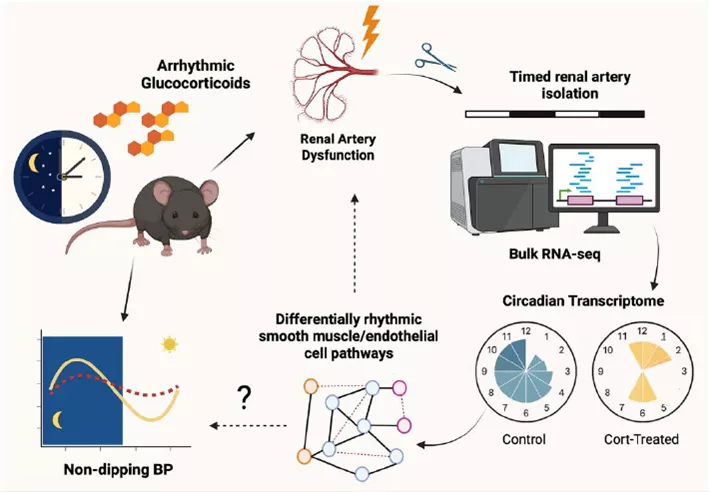
Loss of the normal nocturnal blood pressure dip is a powerful predictor of cardiovascular risk, yet the underlying vascular mechanisms remain unclear. Because glucocorticoids synchronise peripheral clocks, we tested how disrupting their natural rhythm affects vascular biology.
In mice, flattening glucocorticoid rhythms abolished the normal time-of-day variation in renal artery vasodilation and profoundly reshaped the vascular circadian transcriptome. Hundreds of genes changed their rhythmic behavior, including pathways linked to oxidative stress, inflammation, and mitochondrial function. These findings uncover a previously underappreciated link between hormonal circadian signals and vascular function.
The results offer a molecular framework for understanding non-dipping blood pressure patterns and may reveal rhythm-based therapeutic opportunities.