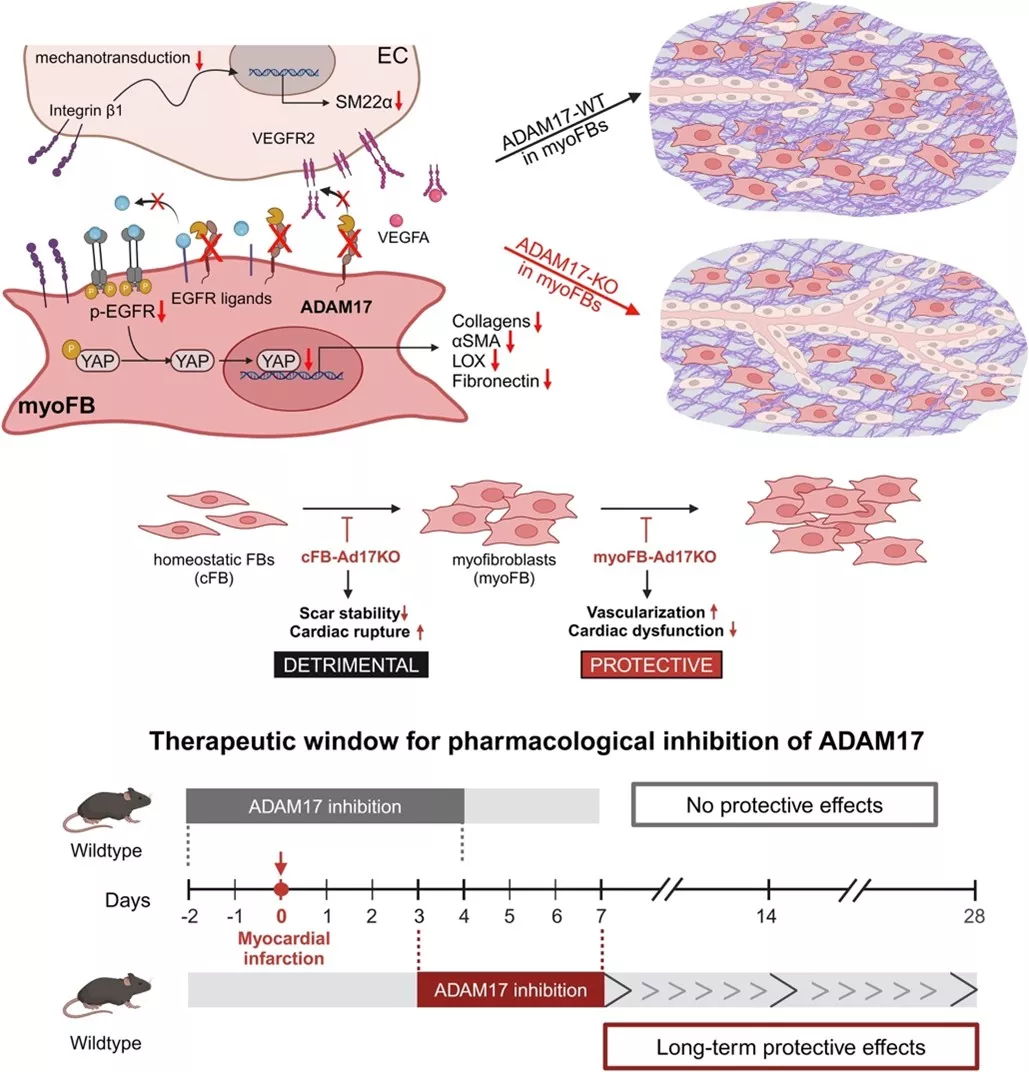
Temporal inhibition of ADAM17 in fibroblasts reduces stiffness and promotes vascularization following myocardial infarction
Cardiovascular Research
After myocardial infarction (MI), fibroblasts drive scar formation – but could timing their signalling improve healing? This study identifies a pivotal role for ADAM17 in post-MI remodelling.
In human infarcts, ADAM17 is strongly upregulated in myofibroblasts. Using inducible mouse models, the authors show that early loss of ADAM17 in fibroblasts disrupts initial scar formation and increases risk of ventricular rupture. In contrast, inhibiting ADAM17 later in activated myofibroblasts softens the scar, enhances endothelial proliferation and vascularisation, and limits infarct expansion and left ventricle remodeling. Mechanistically, this involves reduced EGFR–YAP signaling and extracellular matrix remodeling.
These findings highlight timing-specific ADAM17 inhibition as a potential strategy to improve healing and prevent heart failure after MI.