


New national strategy aims to increase number of cardiologists and reduce cardiovascular mortality by 30% by 2030
Romania has among the highest mortality rates for cardiovascular disease in Europe. Approximately 57% of deaths are caused by cardiovascular and cerebrovascular diseases. And while the number of cardiologists per capita is broadly in line with its neighbours, the distribution of those specialists is uneven: one-third are in Bucharest and another 44% are in other major cities, leaving large swathes of the country with limited access to cardiology consultants.
In response, Romania’s cardiologists and neurologists have worked with the government to devise a new strategy, complemented by a concrete implementation plan – making Romania the fifth country to publish a national cardiovascular health strategy, alongside Spain, Portugal, Poland and Czechia.
Adopted by the government on 14 July 2025 and backed by designated funding, the strategy is based on the National Health Strategy that runs until 2030. "The strategy presents the situation in Romania and outlines the five major directions of action on cardiovascular and cerebrovascular diseases", says Prof. Dragos Vinereanu, President of the Romanian Heart Foundation. "The Action Plan sets out eight general objectives with more than 30 actions, assigns responsibility, and includes a budget."
One of the overarching goals is a 30% reduction in cardiovascular mortality by 2030, with more cardiac care and stroke units rolled out across the country. It also aims to expand the number of cardiologists in Romania by 10% and improve access in all counties. The plan comes with a budget of approximately €204 million over five years, with additional funding from other sources, including the national insurance house and regional administrations.
Five priority areas are:
- Risk factors and prevention,
- Treatment,
- Rehabilitation,
- Health system and human resources,
- Research, development and innovation – including registries.
"What’s unique to Romania’s strategy is that it’s a joint effort by cardiologists and neurologists", Prof. Vinereanu says. "We worked together on the strategy, with input from professional societies, and then built a plan of action."
While partnering with another speciality could have complicated this effort, he adds that the collaboration made for a more comprehensive plan with broad support. "We have developed a very good relationship with our colleagues in neurology – everyone is pleased with the result and we are moving into the implementation phase with great momentum."
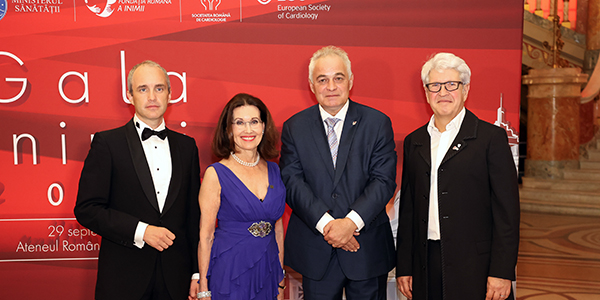
The plan was launched at a major gala event in Bucharest, held on World Heart Day, 29 September, attended by political, academic and clinical leaders, as well as the media, ensuring strong public awareness of the new direction for Romania’s health system.
Prof. Cecilia Linde, ESC President-Elect, attended the gala and offered her support and good wishes to colleagues in Romania.
"Congratulations to the Romanian Cardiac Society for the CV Health Plan and the great work with scientific organisations and national authorities, both on CVD and stroke", Prof. Linde said. "It represents a great advancement towards improving quality of life, and provides a great example for other countries to follow."
The launch of the plan marks the conclusion of the first phase of a long-term effort. "The next step will be to secure government funds this year to improve our treatment programmes, notably in interventional cardiology and electrophysiology, and to continue expanding our epidemiological registries which began under the EuroHeart programme", Prof. Vinereanu says. "We would also welcome the support of the Health Ministry in making it mandatory to upload patient data to the registry."
The plan also aims to launch between 10 and 12 regional prevention centres – Romania currently has eight such regional coordinating centres, part of an EU programme. It foresees an increase in risk factor control and early diagnosis of cardiovascular and cerebrovascular diseases. Meanwhile, for acute coronary syndromes and stroke, the plan aims to reduce time from symptoms to intervention by at least 20%.
"Now we must focus on implementation", says Prof. Vinereanu. "This is just the end of the beginning – and the start of a new journey."
An inspiration to others
In a video message posted on World Heart Day, EU Commissioner for Health, Olivér Várhelyi, congratulated Romania on its achievements and encouraged others to follow their example.
"Romania's cardiovascular disease plan is a step forward in ensuring that people live longer, happier and more productive lives", Commissioner Várhelyi said. "We hope this commitment inspires more members to follow suit and further protect the cardiovascular health of their citizens supported by the incoming EU Cardiovascular Health Plan."
We look forward to following Romania’s progress as they implement their detailed strategy and plan in the years ahead. Congratulations to all who helped develop this vision for better heart health for people in every county of the country.