


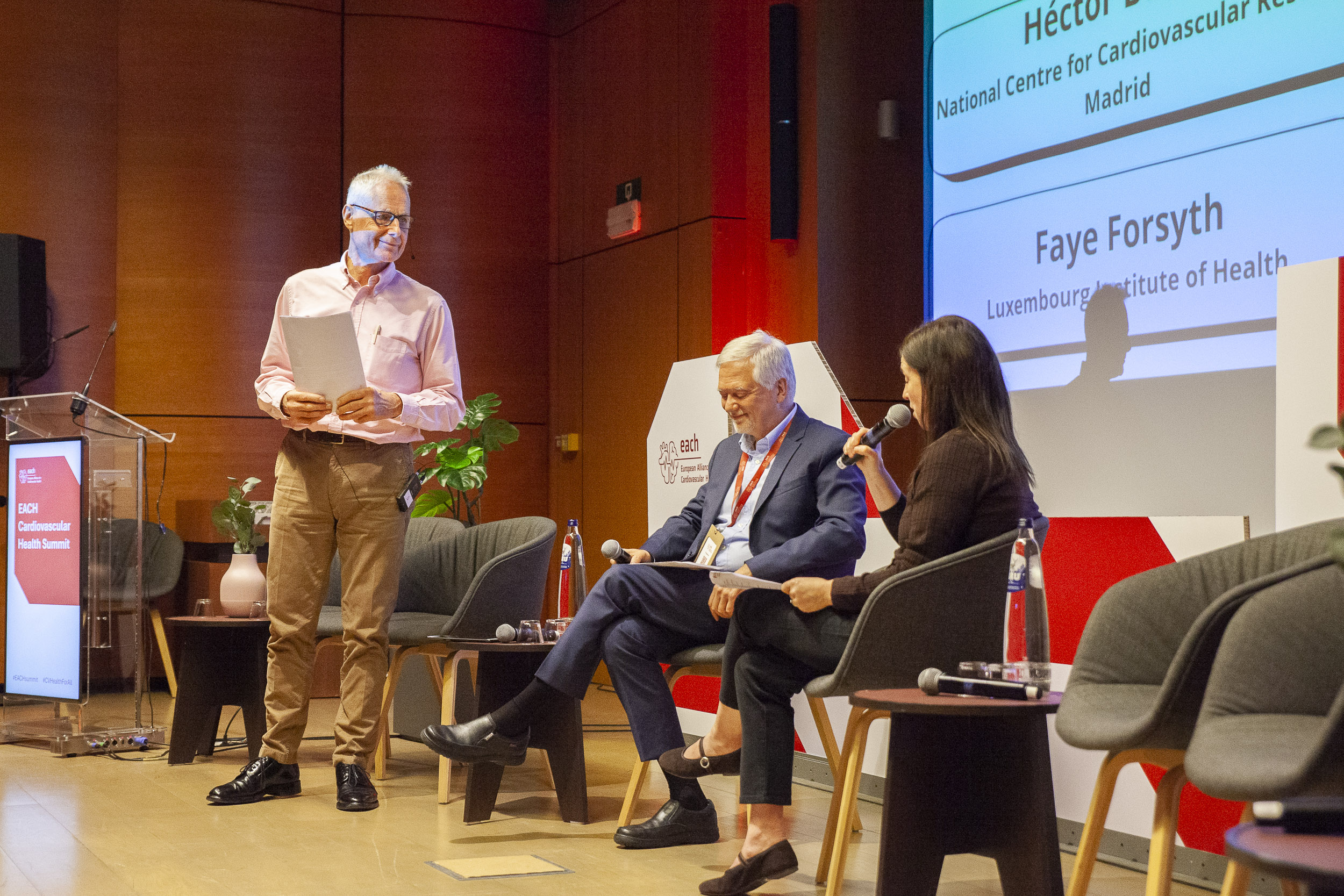
On 10–11 December, we welcomed the inaugural European Alliance for Cardiovascular Health (EACH) summit in Brussels, where politicians, healthcare professionals, industry, and patients explored how technology, data, inequalities and gender differences are shaping cardiovascular health.
Richard Mindham of the ESC Patient Forum was among those who contributed patient expertise and experience to the discussion. He has been an active contributor to the work of the ESC for several years, including helping to develop patient versions of key ESC documents. In this month’s edition, we ask him how patients can influence policy and service delivery.
Why mental health care is vital for cardiology patients
In 2007, Richard Mindham had been feeling a deep fatigue for months. He thought he was suffering from mental and physical exhaustion, brought on by overwork. At his wife’s insistence, he went to see his doctor who suspected Richard’s severe tiredness had a serious underlying cause: he was diagnosed with dilated cardiomyopathy.
As he was just 50 years of age at the time, the news came as a shock. Richard stepped away from his career to focus on his health and recalls feeling as though he’d been suddenly fast-tracked into a new chapter of life.
"The average age of someone who is diagnosed with heart failure is seventy-eight", he says. "Every document I read about my condition showed a frail person with a walking stick. That can affect one’s identity and sense of self."
In addition to the excellent medical care he received and his own commitment to stay healthy, Richard took his GP’s advice to try meditation. This helped to give him a more holistic view of wellbeing and, when the opportunity arose to represent the ESC Patient Forum on a Task Force drafting an ESC Consensus Statement on Mental Health and CVD, he grasped it with both hands.
"The focus of cardiology care is often on mortality and clinical outcomes, but patients frequently say that if they can’t get up the stairs or play with their grandchildren, they don’t have quality of life", he explains. "Of course, we all want to live forever, but most would choose quality over extending life. Mental health is central to that."
Consensus Statement: Patient Version
While the medical management of many cardiovascular conditions has improved over several decades, less attention has been paid to patients' psychological wellbeing. Richard, who has co-authored a paper on the emotional impact of cardiac diagnoses, says patient involvement in developing guidelines and consensus statements delivers better overall outcomes.
"Patients are concerned about their heart, but they also wonder if they can keep their jobs, feed their families; they ask whether they can ride their bike or go on holiday", Richard says. "It’s a natural reaction to life-changing news."
The new patient-friendly version of the ESC Clinical Consensus Statement on mental health acknowledges the links between cardiology and psychology. The relationship can go both ways: not only can people with cardiovascular disease suffer depression and anxiety, those living with mental illnesses face higher cardiovascular risk.
The Consensus Statement is the result of two years' work and highlights the role of psycho-cardio teams (including nurses, doctors, psychologists and psychiatrists) in delivering integrated, person-centred care. As the field is relatively new, and evidence is still emerging, it does not yet have the status of an official ESC Guideline, but it marks a significant step towards a more holistic approach. The patient version is designed to give readers insights into the care they should expect and the kind of support that they, and their carers, may benefit from.
Patients as partners
The ESC piloted patients sitting on guideline task forces from 2019, and started developing patient versions of Guidelines in 2021, starting with Heart Failure and CVD Prevention. There are now eight patient versions of ESC publications freely available with more in the pipeline. The documents enable shared decision-making by informing patients and caregivers about diagnostics and treatment, without replacing education outreach by national cardiac societies.
Richard says the latest patient-focused document was a true collaboration by a wide group of clinical and patient experts. By involving patients and cardiologists as partners, the ESC is helping to drive more person-centred care. Not only is that better for the patient, but it is also what clinicians and health service commissioners are striving for.
"The patient voice helps to improve care", he says. "By dealing with the whole person and addressing the psychological consequences of disease, the patient experience is improved."
Stay connected with all our advocacy initiatives on the new ESC Public Health webpage.