


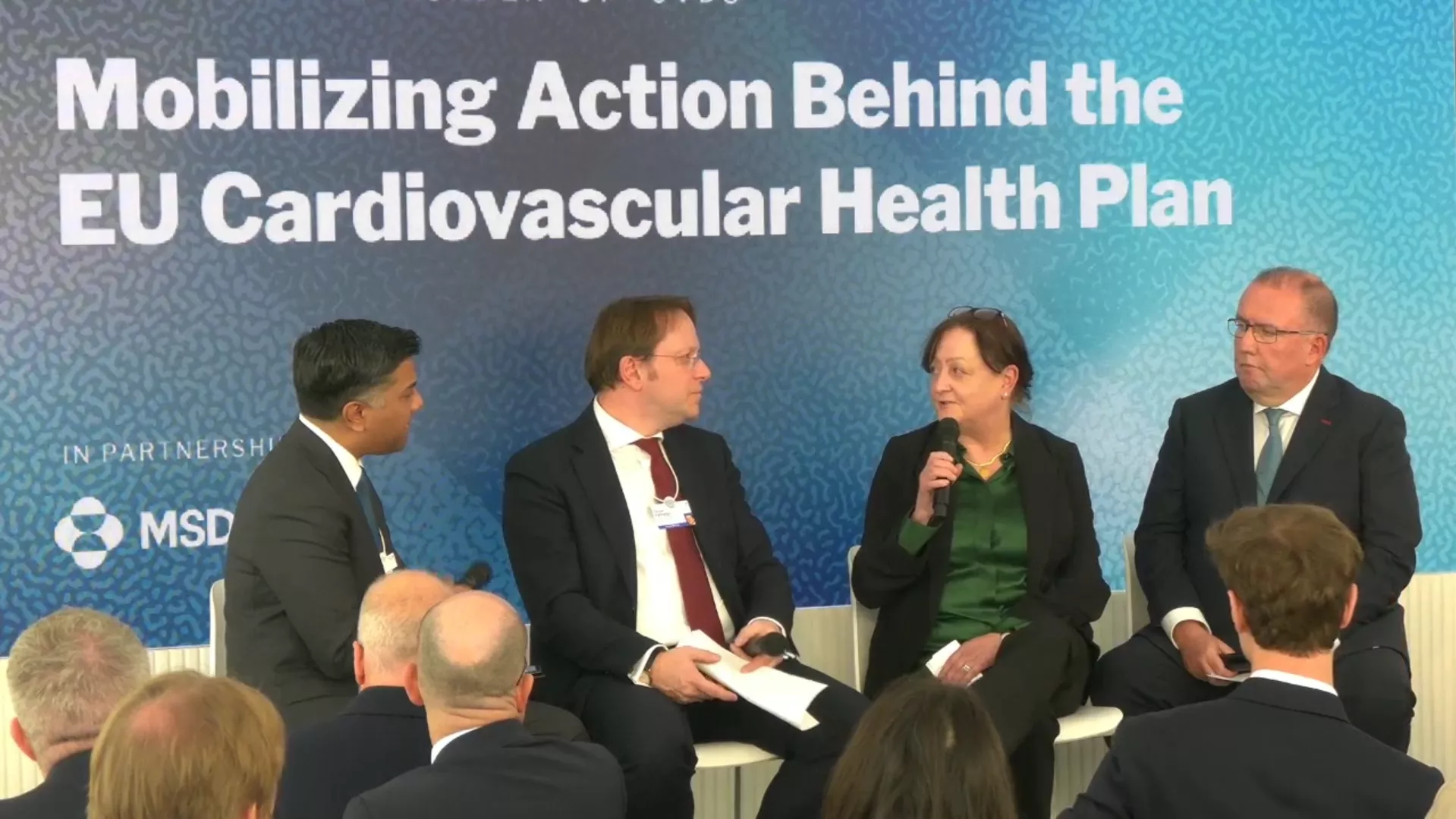
European Commissioner for Health Oliver Várhelyi set the tone of the debate, presenting the Plan’s core pillars and its most transformative initiatives to reduce cardiovascular mortality and morbidity. His message was clear: this is a critical juncture for Europe’s health systems, and success depends on embedding prevention into everyday care.
Prof. Susanna Price, ESC Vice President and Chair of the Advocacy Committee, brought the discussion to ground level. Speaking from her experience in operating theatres and intensive care, she stressed that implementation must reflect the realities of each Member State. “We are not starting from scratch,” she noted, pointing to existing registries, standards of care, and scientific evidence. What is needed now is collaboration - aligning policymakers, healthcare professionals, industry, and patients to turn a plan on paper into a legacy for citizens.
Mike Morrissey, Associate Vice President, Global Public Policy Europe & Canada at MSD, placed Europe’s approach in a global context, noting that “for the first time, multiple countries in one region have a cardiovascular health plan that empowers citizens to know their numbers - from blood pressure to LDL cholesterol".
The urgency is therefore undeniable, as outlined by all panellists. Cardiovascular disease remains Europe’s leading cause of death, yet the majority of premature heart attacks and strokes are preventable. Without decisive action, projections show that 10 million Europeans could be living with CVD annually by 2050. Rising obesity among younger generations and an ageing population threaten health systems and economic resilience.
The path forward centers on routine health checks and digital care pathways, tracking progress through clear indicators: blood pressure control, LDL-cholesterol reduction, blood sugar monitoring, and measurable declines in heart attacks, strokes, and CVD mortality. These metrics will serve as a scoreboard for success, enabling rapid course correction and consistent implementation.
Momentum is building. The ESC and its network of National Cardiac Societies are united behind this Plan, stressed Prof. Price. The challenge now is to help every Member State adapt the EU framework into a national plan that works within its infrastructure - and deliver real change for citizens in the long-term.
You can watch the recording of the session here.