


ESC Clinical Practice Guidelines
Trusted recommendations for your clinical practice
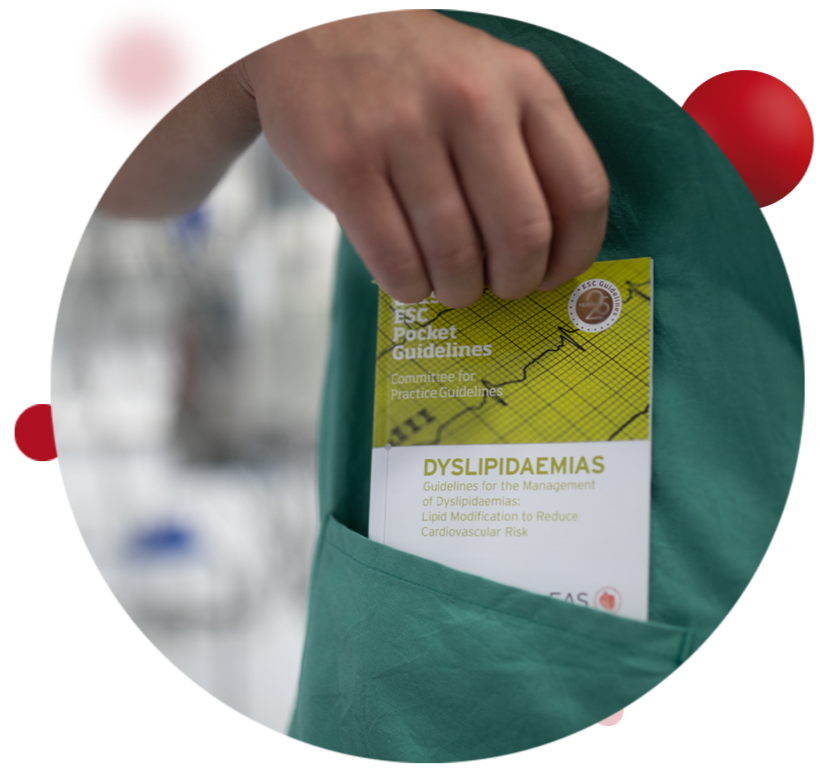
Used daily by healthcare professionals around the world
Discover the guidelines released in 2025
ESC Guidelines represent the official position of the European Society of Cardiology on a specific topic. Our guidelines can help you determine the best diagnostic or therapeutic approach for individual patients with a given condition by providing a framework for decision making.
Meticulously developed by expert task forces and based on current evidence, they are regularly updated.

2025 ESC Guidelines for the management of cardiovascular disease and pregnancy
The current Guidelines for the management of cardiovascular disease and pregnancy support health care professionals to manage and care for women with cardiovascular diseases before, during and after pregnancy.
2025 Focused Update of the 2019 ESC/EAS Guidelines for the management of dyslipidaemias
This 2025 Focused Update addresses changes in recommendations for the treatment of dyslipidaemias based on new evidence published since the 2019 version, up until 31 March 2025.
2025 ESC Clinical Consensus Statement on mental health and cardiovascular disease
This clinical consensus statement on mental health and cardiovascular disease highlights the multidirectional relationship between mental health, cardiovascular health and cardiovascular disease and its impact on cardiovascular risk and prognosis.
2025 ESC Guidelines for the management of myocarditis and pericarditis
These guidelines introduce a comprehensive, patient-oriented framework for the diagnosis and management of IMPS, spanning the full disease spectrum.
2025 ESC/EACTS Guidelines for the management of valvular heart disease
The 2025 ESC/EACTS Guidelines for the management of valvular heart disease (VHD) are an update of the 2021 version of this document.
Guidelines Implementation Made Easier
Practical tools to improve guidelines uptake
ESC Chat - your AI-powered guidelines companion
Get quick and personalised answers to your clinical queries, plus reference links and citations. Based exclusively on current ESC Clinical Practice Guidelines.
ESC Pocket Guidelines App
Convenient resources available directly on your mobile device.
ESC Guidelines Reprints
Order printed copies of the full texts.
Essential messages and educational slide sets
Reach your quality of care objectives with these essential messages and slide sets. Easy to use and interpret into real-world application.
Guidelines and National Cardiac Societies
Supporting the global adoption of evidence-based cardiovascular care
From endorsement to translation, National Cardiac Societies play a big role in making ESC Guidelines accessible to cardiologists and other medical practitioners around the world. That means better patient outcomes.

Guidelines Development
How are ESC Guidelines developed? How can you get involved?
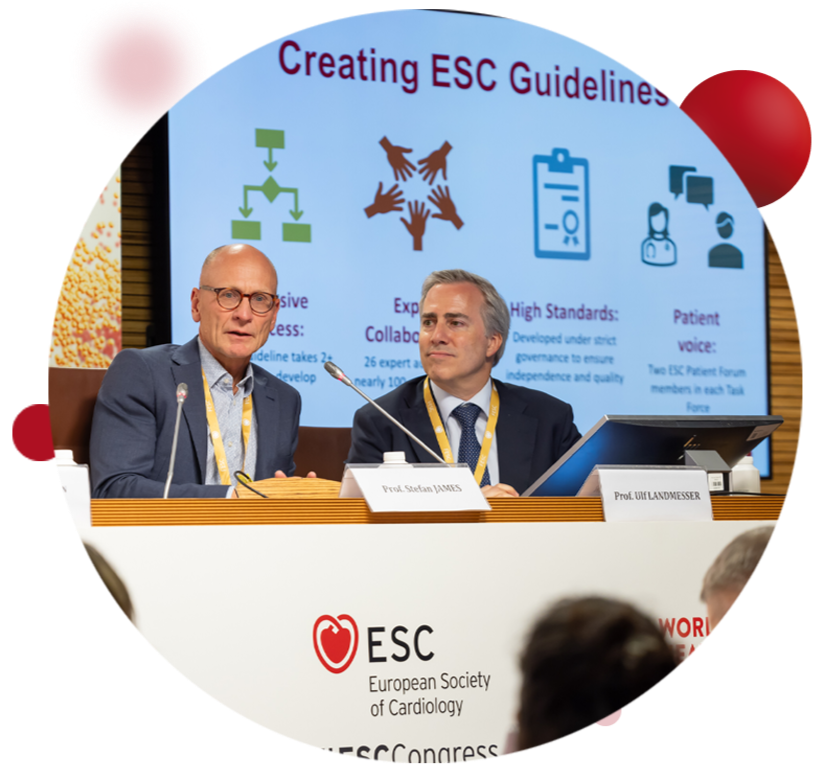
Understand the process behind trusted, evidence-based recommendations.
Task forces create the recommendations for clinical practice through a rigorous two-year process. An annual call for guidelines task force members is opened at the beginning of each year.
More to Explore
All ESC Practice Guidelines
ESC Clinical Practice Guidelines aim to present the relevant evidence on a clinical issue to help physicians weigh the benefits and risks of a particular diagnostic or therapeutic approach.
Developing trustworthy clinical practice guidelines
We publish guidelines and related resources to support everyone involved in cardiovascular care.
Patient versions of ESC Guidelines
ESC Patient Guidelines translate expert clinical recommendations into clear, everyday language.
ESC Pocket Guidelines App
Convenient resources available directly on your mobile device.
ESC Chat - your AI-powered guidelines companion
Get quick and personalised answers to your clinical queries, plus reference links and citations. Based exclusively on current ESC Clinical Practice Guidelines.