Key words
Acute coronary syndrome; adherence; beta-blocker; clinical management; survival
Abbreviation list
ACS: acute coronary syndrome
CABG: coronary artery bypass grafting
CNIC: Spanish National Centre for Cardiovascular Research
DAPT: dual antiplatelet therapy
DOACs: direct oral anticoagulants
HbA1C: glycated haemoglobin
HDL-C: high-density lipoprotein-cholesterol
LDL-C: low-density lipoprotein-cholesterol
LVEF: left ventricular ejection fraction
PCSK9: proprotein convertase subtilisin/kexin type 9
QOL: quality of life
WHO: World Health Organization
Take-home messages
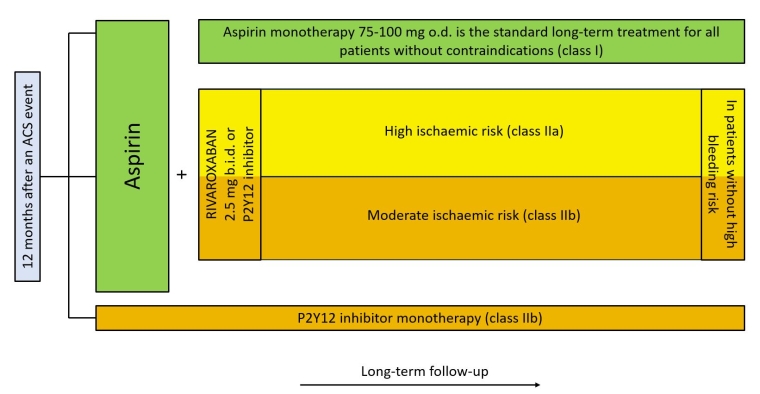
- An extended course of dual antithrombotic therapy should be considered in individuals with high ischemic risk without high bleeding risk or major bleeding complications.
- After the first acute coronary syndrome event, the goal is to lower LDL-C to <1.4 mmol/L (<55 mg/dL) and to reduce LDL-C levels ≥50% from baseline.
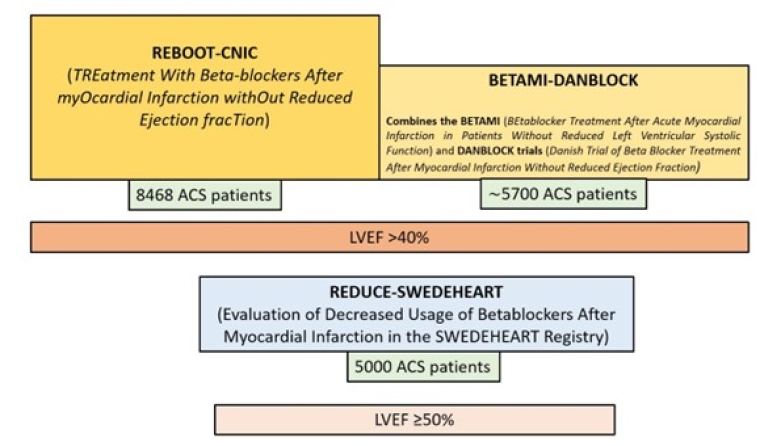
- Beta-blockers are recommended in patients with LVEF ≤40% after an acute coronary syndrome, regardless of heart failure symptoms.
- A polypill strategy should be considered to improve adherence and cardiovascular outcomes after an acute coronary syndrome.
Patient-oriented message
After an acute coronary syndrome, secondary prevention should be offered to all patients and start as soon as possible after the index event in order to avoid complications such as the occurrence of another acute coronary syndrome. Long-term management includes psycho-social counselling, pharmacological treatment optimisation and adherence as well as cardiac rehabilitation and has been proven to both increase the quality of life and decrease morbidity and mortality.
It is of paramount importance to include patients in the decision-making. Educating and informing the patient properly and employing appropriate material should be integrated into the standard patient care pathway.
Introduction
Secondary prevention after an acute coronary syndrome (ACS) is key to improving quality of life (QOL) as well as to diminishing morbidity and mortality rates. This should consist of a multimodal approach, including cardioprotective medications, lifestyle management and cardiac rehabilitation referral, all of which should start as soon as possible after the index event. In order for these changes to be implemented by the patient, an outpatient clinical appointment should be arranged, so as to review the patient´s objectives and preferences, as well as to review the management of the different comorbidities they may suffer from.
According to the 2023 ESC Guidelines for the management of acute coronary syndromes [1], treatment goals con be divided into 3 subgroups:
- Support of healthy lifestyle pathways, such as regular exercise, smoking cessation and psychosocial management, among others.
- Continuation of optimal medical therapy, including annual influenza vaccination, promoting medication adherence, lipid-lowering therapy and antithrombotic therapy.
- Achieve the risk factor treatment targets including, but not limited to blood pressure, low-density lipoprotein-cholesterol (LDL-C) levels as well as glycated haemoglobin (Hba1C) levels.
Even though the approach to successful long-term management is multimodal, this article will focus mainly on four areas: antithrombotic therapy, lipid-lowering therapy, beta-blocker therapy and the role of pharmacological adherence, after an ACS.
Importance of long-term risk assessment before discharge
Prior to discharge, it is of paramount importance for every patient to undergo a thorough long-term risk assessment which should include left ventricular ejection fraction (LVEF), residual ischaemia, complexity of coronary artery disease as well as completeness of revascularisation, in-hospital complications, and analytic risk markers such as LDL-C, high-density lipoprotein cholesterol (HDL-C), fasting triglycerides, plasma glucose and renal function status. It is important to measure LDL-C upon the patient´s admission to the hospital, as these levels tend to decrease in the subsequent days after an ACS.
It is relevant to note that if successful reperfusion is not performed, the risk of early complications and death increases significantly. In this particular subset of patients, residual ischaemia should be assessed and, when indicated, myocardial viability as well.