


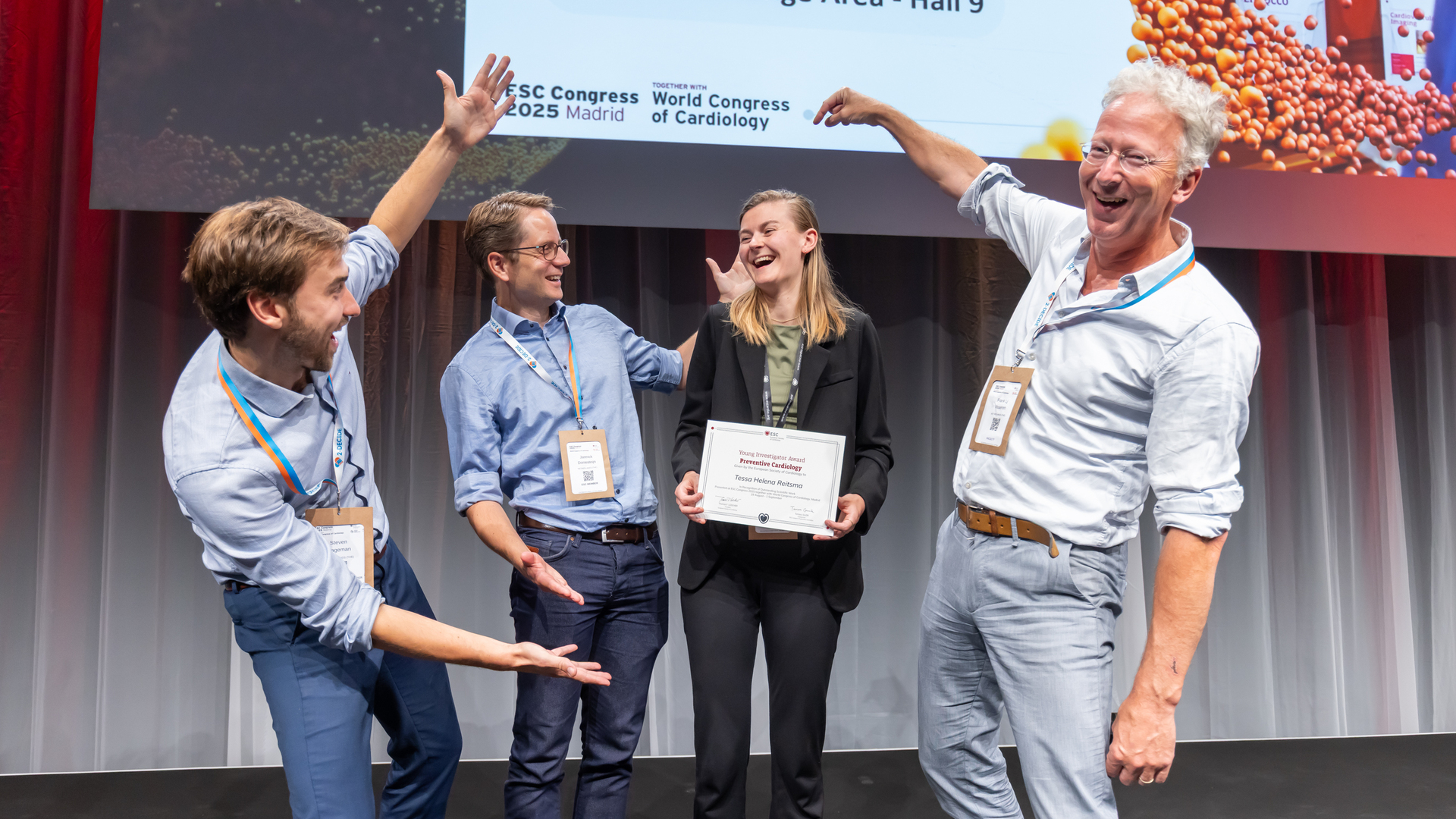
ESC Congress 2025 Young Investigators
Congratulations to all finalists and award winners!
Young Investigator Award Session in Valvular Heart Disease
Mirjam Gauri Wild (University Heart Center Freiburg - Bad Krozingen, Germany)
Young Investigator Award Session in Basic and Translational Sciences
Tal Caller (Sheba Medical Center - Tel Aviv, Israel)
Young Investigator Award Session in Cardiovascular Imaging
Roman Roy (St Bartholomews and Queen Mary University – London, United Kingdom)
Left atrioventricular coupling index in health and disease: a longitudinal multicohort analysis
Young Investigator Award Session in Arrhythmias, Pacing and Electrophysiology
Roman Tikhomirov (National Heart and Lung Institute Imperial College – London, United Kingdom)
Young Investigator Award Session in Heart Failure and Cardiomyopathies
Louise Bjerregaard (Aarhus University Hospital – Aarhus, Denmark)
Effects of bisoprolol and verapamil in non-obstructive hypertrophic cardiomyopathy
Young Investigator Award Session in Preventive Cardiology
Christos Kotanidis (Brigham and Women's Hospital, Harvard Medical School – Boston, USA)
Young Investigator Award Session in Atherothrombosis, Coronary, Aortic and Peripheral Artery Disease
Ornela Velollari (University Medical Centre of the Johannes Gutenberg University – Mainz, Germany)
Endotypes of angina with non-obstructive coronary arteries
Young Investigator Award Session in Population Science, Genetics and Epidemiology
Ryo Kurosawa (RIKEN Center for Integrative Medical Sciences - Shinagawa-Ku, Japan)
Young Investigator Award Session in Interventional Cardiology
Astrid Duus Mikkelsen (Rigshospitalet - Copenhagen University Hospital – Copenhagen, Denmark)
ESC Congress 2024 Young Investigators
Young Investigator Award in Interventional Cardiology
Pernille Gro Thrane (Aarhus, Denmark)
Trends in major cardiac events after ST-segment elevation myocardial infarction treated with primary percutaneous coronary intervention from 2003 to 2017: the western Denmark heart registryYoung Investigator Award in Basic and Translational Sciences
Nadia Chaher (London, United Kingdom of Great Britain & Northern Ireland)
Quantitative molecular imaging of cardiac fibrosis and response to treatment using a novel collagen III-specific MR imaging probeYoung Investigator Award in Cardiovascular Imaging
Neil Craig (Edinburgh, United Kingdom of Great Britain & Northern Ireland)
Valvular and myocardial fibroblast activation in aortic stenosis: a prospective positron emission tomography studyYoung Investigator Award in Arrhythmias, Pacing and Electrophysiology
Luisa Freyer (Munich, Germany)
PPGAF-score: a photoplethysmographic risk prediction tool for developing atrial fibrillationYoung Investigator Award in Heart Failure and Cardiomyopathies
Niklas Beyhoff (Oxford, United Kingdom of Great Britain & Northern Ireland)
Young Investigator Award in Preventive Cardiology
Brendon Neuen (Sydney, Australia)
Bidirectional relationship between kidney disease progression and cardiovascular events in type 2 diabetes: new Insights from the CANVAS Program and CREDENCE trialYoung Investigator Awards in Atherothrombosis, Coronary, Aortic and Peripheral Artery Disease
Agnes Wahrenberg (Stockholm, Sweden)
Plasma protein profile associated with a family history of early-onset coronary heart diseaseYoung Investigator Awards in Population Science, Genetics and Epidemiology
Sean Zheng (London, United Kingdom of Great Britain & Northern Ireland)
Genome-wide association analysis reveals insights into the molecular etiology of dilated cardiomyopathyYoung Investigator Awards in Valvular Heart Disease
Isaac Shiri Lord (Bern, Switzerland)
Multi-modal artificial intelligence-based prediction for cardiovascular mortality after transcatheter aortic valve implantation: a time-to-event survival predictionESC Congress 2023 Young Investigators
Young Investigator Award Thrombosis
Tobias Harm (Tuebingen, Germany)
Young Investigator Award Basic Science
Srividya Velagapudi (Zurich, Switzerland)
Young Investigator Award Population Sciences
Floris Heinen (Den Haag, The Netherlands)
Young Investigator Award Clinical Cardiology
Florian Alexander Wenzl (Zurich, Switzerland)
Young Investigator Award Coronary Pathophysiology and Microcirculation
George Abraham (Cambridge, United Kingdom of Great Britain & Northern Ireland)
Reduced trans-myocardial extraction of endothelin-1 in cardiac allograft vasculopathy
Young Investigator Awards Session in Heart Failure
Sean Zheng (London, United Kingdom of Great Britain & Northern Ireland)
ESC Congress 2022 Young Investigators
Young Investigator Award Thrombosis
Konrad Pieszko (Nowa Sol, Poland)
Young Investigator Award Basic Science
Shintaro Yamada (Tokyo, Japan)
Aberrant interaction between TEAD1 and Lamin A/C causes cardiomyopathy
Young Investigator Award Population Sciences
Shady Abohashem (Revere, United States of America)
Young Investigator Award Clinical Cardiology
Alexandros Protonotarios (London - United Kingdom of Great Britain & Northern Ireland)
Young Investigator Award Coronary Pathophysiology and Microcirculation
Roberto Scarsini (Verona , Italy)
Young Investigator Awards Session in Cardiac Imaging
Marco Spartera (Oxford, United Kingdom of Great Britain & Northern Ireland)
See also Best Clinical Case and Nursing and Allied Professions Investigator
ESC Congress 2021 Young Investigators
Young Investigator Award Thrombosis
Evangelos Tzolos (Edinburgh, United Kingdom of Great Britain & Northern Ireland)
In vivo coronary artery thrombus imaging with 18F-GP1 PET-CT
Young Investigator Award Basic Science
Rafael Blanco Dominguez (Madrid, Spain)
CD69 expression in regulatory T cells protects from the immune-mediated damage after myocardial infarction
Young Investigator Award Population sciences
Constantin-Cristian Topriceanu (London, United Kingdom of Great Britain & Northern Ireland)
Childhood bradycardia associates with atrioventricular conduction defects in older age: a longitudinal birth cohort study
Young Investigator Award Clinical Cardiology
Matthew Burrage (Oxford, United Kingdom of Great Britain & Northern Ireland)
Impaired myocardial energetics limits cardiac functional reserve and leads to exercise-induced pulmonary congestion in heart failure with preserved ejection fraction
Young Investigator Award Coronary Pathophysiology and Microcirculation
Christos Kotanidis (Oxford, United Kingdom of Great Britain & Northern Ireland)
A human arterial transcriptomic signature predicts major adverse cardiac events and identifies novel, redox-related therapeutic targets within the vascular wall
Young Investigator Award Sudden Cardiac Death
Richard Elis Jones (London, United Kingdom of Great Britain & Northern Ireland)
In-depth phenotypic characterisation of myocardial fibrosis by cardiovascular magnetic resonance predicts sudden cardiac death in coronary heart disease: a long-term prospective outcome study
ESC Congress 2020 Young Investigators
Young Investigator Award Thrombosis
Dario Bongiovanni (Muenchen, Germany)
The pro-thrombotic transcriptomic signature of reticulated platelets in patients with chronic coronary syndrome.
Young Investigator Award Basic Science
Michael Lacy (Muenchen, Germany)
Modification of histone 3 lysine 27 (H3K27) trimethylation in EZH2 and JMJD3 deficient T cells attenuates atherosclerosis through polarization towards anti-inflammatory phenotypes.
Young Investigator Award Population sciences
Anders Holt (Copenhagen, Denmark)
Effect of beta blocker therapy following myocardial infarction in optimally treated patients in the reperfusion era - a Danish, nationwide, and registry-based cohort study.
Young Investigator Award Clinical Cardiology 1
Federico Fortuni (Pavia, Italy)
A matter of proportions: a novel framework to classify functional tricuspid regurgitation.
Young Investigator Award Clinical Cardiology 2
Jeanne Du Fay De Lavallaz (Basel, Switzerland)
Application of the ESC and AHA guidelines for admission of syncope patients presenting to the ED.
Young Investigator Award Coronary Pathophysiology and Microcirculation
Rocco Montone (Rome, Italy)
Macrophage infiltrates in coronary plaque erosion portend a worse cardiovascular outcome in patients with acute coronary syndrome.
ESC Congress 2019 Young Investigators
Young Investigator Award Global Cardiovascular Health
Alessandro Vella (San Donato Milanese, Italy)
Phenotyping acute decompensated heart failure by intrarenal venous flow and right ventricle-pulmonary circulation uncoupling
Young Investigator Award Basic Science
Emile Nyns (Leiden, The Netherlands)
Continuous shock-free termination of atrial fibrillation by local optogenetic therapy and arrhythmia-triggered activation of an implanted light source
Young Investigator Award Thrombosis
Lina Guiomar Mendieta Badimon (Barcelona, Spain)
Intravenous administration of IV-STATIN CARDIOSHIELD during myocardial infarction renders higher cardioprotection than oral atorvastatin given shortly after reperfusion: a translational CMR studyPhenotyping acute decompensated heart failure by intrarenal venous flow and right ventricle-pulmonary circulation uncoupling
Young Investigator Award Population Sciences
Parag Ravindra Gajendragadkar (Oxford, United Kingdom)
Impact of genetically determined differences in ECG parameters on risk of AF in c. 300,000 UK Biobank participants
Young Investigator Award Clinical Cardiology
Evangelos K. Oikonomou (Oxford, United Kingdom)
Perivascular fat attenuation index stratifies the cardiac risk associated with high-risk plaque features on coronary computed tomography angiography
Young Investigator Award Coronary Pathophysiology and Microcirculation
Betty Raman (Oxford, United Kingdom)
Blunted stress myocardial oxygenation and not myocardial perfusion reserve is associated with arrhythmic risk in hypertrophic cardiomyopathyPhenotyping acute decompensated heart failure by intrarenal venous flow and right ventricle-pulmonary circulation uncoupling
ESC Congress 2018 Young Investigators
Young Investigator Award Global Cardiovascular Health
Dr. Tarek Nafee
Performance of a machine learning model vs. IMPROVE score for VTE prediction in acute medically ill patients: insights from the APEX trial
Young Investigator Award Basic science
Dr. Toshiyuki Ko
Single-cell analysis of non-cardiomyocytes in heart reveals a critical regulator of cardiac homeostasis
Young Investigator Award Population sciences
Ms. Nicole Elise Maria Jaspers
Development and validation of a decision-support tool for individualizing lifelong lipid, blood-pressure, and aspirin treatment in people without cardiovascular disease
Young Investigator Award Clinical
Dr. Evangelos K Oikonomou
Computed tomography-based perivascular fat phenotyping identifies unstable coronary lesions and active vascular calcification
Young Investigator Award Coronary
Dr. Ioannis Akoumianakis
Insulin triggers oxidative stress in the vascular wall of patients with atherosclerosis, independently of systemic insulin resistance: the beneficial role of DPP-IV inhibition
Young Investigator Award Valvular Heart Disease
Dr. Timothy Cartlidge
18F-Fluoride PET-CT in the detection of early bioprosthetic valve degeneration
ESC Congress 2017 Young Investigators
Young Investigator Award winner on Thrombosis
Dr. Simon Wilson, United Kingdom
Thrombin Exosite 1 Inhibition with JNJ-375 Inhibits Fibrin-Rich Thrombus Formation in a Human Translational Model of Thrombosis
Young Investigator Award winner on Basic Science
Ms. Franziska Sophie Rathjens
Molecular mechanisms of arrhythmia upon TBX5 loss
Young Investigator Award winner on Population Sciences
Ms. Linda Vissers
Is dairy product intake related to risk of type 2 diabetes? A pan-European Mendelian Randomisation study.
Young Investigator Award winner on Clinical Science
Dr. Husam Abdel-Qadir
The spectrum of cardiovascular disease after early stage breast cancer: a population-based cohort study
Young Investigators Award winner on Coronary Pathophysiology and Microcirculation
Dr. Jerrett Khee Eiong Lau
Remote ischaemic preconditioning causes rapid increase in coronary flow reserve and reduction in microcirculatory resistance.
Young Investigator Award Percutaneous Coronary Intervention
Dr. Giovanni Ciccarelli
Angiography versus hemodynamic assessment to predict the natural history of coronary stenoses: a fractional flow reserve versus angiography in multivessel evaluation 2, (FAME 2)-substudy.
Previous years' awardees
Young Investigators Award winners on Basic Science
- ESC CONGRESS 2016 - Dr. Kenzo Ichimura, Japan:Anoparticle-mediated targeting of pitavastatin into small pulmonary arteries by intravenous administration attenuates the progression of monocrotaline-induced pulmonary arterial hypertension in rats.
- ESC CONGRESS 2015 - Sarah Costantino, Sweden: miR-218 and mi-R34a induce oxidative stress by orchestrating epigenetic remodelling of DNA/histone complexes in the diabetic heart.
- ESC CONGRESS 2014 - Francesco Paneni (Stockholm, SE): Prolyl-isomerase-1 (Pin1) causes endothelial dysfunction and vascular inflammation in diabetes: a study in mice and humans
- ESC CONGRESS 2013 - Sarah Costantino (Zurich, CH): Hyperglycemia-induced myocardial oxidative stress and inflammation persist despite optimal glycemic control: role of mitochondrial adaptor p66shc
- ESC CONGRESS 2012 - Francesco Paneni (Roma, IT): Vascular hyperglycemic memory is driven by p66Shc via epigenetic changes and post-translational modifications: insights for the progression of vascular complications despite intensive glycemic control
- ESC CONGRESS 2011 - Dennis Wolf (Freiburg Im Breisgau, DE): Selective disruption of the CD40L/Mac-1 interaction by a small peptide inhibitor mimicking the EQLKKSKTL motif attenuates inflammation and atherogenesis in mice
- ESC CONGRESS 2010 - Joanna Hammond (Brussels, BE): Human beta-3 adrenoreceptor over-expression inhibits neurohormones-induced cardiac hypertrophy in vitro and in vivo.
- ESC CONGRESS 2009 - Samuel Sossalla (Goettingen, DE): Atrial fibrillation leads to electrical remodelling of Na currents. Role of INa inhibition by ranolazine on arrhythmias and contractility.
- ESC CONGRESS 2008 - Daan Westenbrink (Groningen, NL): Erythropoietin induced cardiac regeneration in heart failure is mediated through augmented VEGF production by cardiomyocytes.
- ESC CONGRESS 2007 - Simon T Macdonald (Oxford, GB): Epiblastic Cited2 function explains pleiotropy and penetrance of cardiac malformation resulting from its deficiency.
- ESC CONGRESS 2006 - Delvac Oceandy (Manchester, GB): The sarcolemmal calcium pump: a novel mediator of cellular signalling and contractile function in the heart.
- ESC CONGRESS 2005 - Stefan Engelhardt (Muenchen, DE): The transcriptional repressor NAB1 is a specific regulator of pathological cardiac hypertrophy.
Young Investigators Award winners on Clinical Science
- ESC CONGRESS 2016 - Rohan Sajeev Wijesurendra, United Kingdom:Atrial fibrillation is associated with impaired left ventricular energetics that persist despite successful catheter ablation
- ESC CONGRESS 2015 - Chloe Park, United Kingdom:Subclinical left ventricular dysfunction is associated with reduced brain structure and function
- ESC CONGRESS 2014 - Kaleab Asrress (London, GB): Performance of novel adenosine-free and established indices of coronary lesion severity using invasive and non-invasive techniques, as well as absolute quantification of myocardial blood flow
- ESC CONGRESS 2013 - Konstantinos Rizas (Tuebingen, DE): Low frequency waves of repolarization as a novel predictor of mortality after myocardial infarction
- ESC CONGRESS 2012 - Darren Mylotte (Massy, FR): Multivessel primary percutaneous coronary intervention in acute myocardial infarction complicated by cardiogenic shock and resuscitated cardiac arrest: friend or faux?
- ESC CONGRESS 2011 - Jean Malte Sinning (Bonn, DE): The influence of a systemic inflammatory response syndrome on prognosis after transcatheter aortic valve implantation
- ESC CONGRESS 2010 - Andrew Ludman (London, GB): The effect of erythropoietin as an adjunct to PPCI: a randomised controlled trial
- ESC CONGRESS 2009 - Carly Jenkins (Brisbane, AU): Association of outcome with left ventricular parameters measured by two- and three-dimensional echocardiography.
- ESC CONGRESS 2008 - Juan Pablo Kaski (London, GB): Prevalence of sarcomere protein gene mutations in pre-adolescent children with hypertrophic cardiomyopathy.
- ESC CONGRESS 2007 - Anders Sahlen (Stockholm, SE): High reproducibility of cardiac biomarker release in response to endurance exercise.
- ESC CONGRESS 2006 - Anthony White (Melbourne, AU): Matrix metalloproteinase-3 genotype is associated with higher coronary plaque burden, positive remodelling and increased risk of unstable disease.
- ESC CONGRESS 2005 - Maurizio Pieroni (Rome, IT): Myocardial production of Chromogranin A: a new regulatory peptide of myocyte function.
Young Investigators Award winners on Population Sciences
- ESC CONGRESS 2016 - Jenny Bjerre, Denmark:Risk of motor vehicle accidents in patients with an implantable cardioverter defibrillator - A Danish nationwide study.
- ESC CONGRESS 2015 - Joni Valdemar Lindbohm, Finland: Dose and time dependent associations of smoking to incident subarachnoid hemorrhage in men and women.
- ESC CONGRESS 2014 - Pierluigi Costanzo (York, GB): Impact of change of body mass index on long-term cardiovascular events and all-cause mortality in patients with Type 2 Diabetes Mellitus
- ESC CONGRESS 2013 - Maarten J G Leening (Rotterdam, NL): The healthy volunteer effect and coronary risk prediction in the general population: the Rotterdam study
- ESC CONGRESS 2012 - Mattis Flyvholm Ranthe (Copenhagen, DK): Clustering of cardiovascular diseases in family members of young sudden cardiac death victims: - a danish nationwide cohort study
- ESC CONGRESS 2011 - Nicolas Schroten (Groningen, NL):Renin predicts cardiovascular events in the general population independently of aldosterone or hemodynamic parameters
- ESC CONGRESS 2010 - Radoslaw Debiec (Leicester, GB): Genetic control of heart rate in the general population - a large-scale genetic analysis
- ESC CONGRESS 2009 - Francesco Barone Adesi (Turin, IT): Italian smoking regulation decreased hospital admissions for acute coronary events: effect modification by age and day of the week.
- ESC CONGRESS 2008 - Emil Fosbol (Hellerup, DK): Risk of myocardial infarction and death associated with the use of non-steroidal anti-inflammatory drugs (NSAIDs) among healthy individuals: a nationwide study.
- ESC CONGRESS 2007 - Silke Wiedmann (Regensburg, DE): Genetic variants within the LPIN1 gene, encoding lipin, are influencing phenotypes of the metabolic syndrome in human.
- ESC CONGRESS 2006 - Catherine Mary McGorrian (Dublin, IE): Differences in the risk associated with gender and other risk factors for cardiovascular disease in the presence of self-reported diabetes: the SCORE project.
- ESC CONGRESS 2005 - Ernst Rietzschel (Ghent, BE): Metabolic syndrome, a map of the cardiovascular damage. Results from the asklepios study in 2528 apparently healthy 35-55 year-old subjects.
Young Investigators Award winners on Thrombosis
- ESC CONGRESS 2016 - Christina Fanola, United States of America:A novel risk prediction score in atrial fibrillation for a net clinical outcome from the ENGAGE AF-TIMI 48 randomized clinical trial.
- ESC CONGRESS 2015 - Line Melgaard, Denmark: Assessment of a stroke risk stratification scheme in a heart failure population in sinus rhythm.
- ESC CONGRESS 2014 - Anne-Marie Schjerning Olsen (Hellerup , DK): Impact of NSAID treatment on bleeding risk after myocardial infarction in patients treated with different combinations of aspirin, clopidogrel, or vitamin k antagonist - a Nationwide study
- ESC CONGRESS 2013 - Erik Walter Holy (Zurich, CH): Carbamylated LDL induces a pro-thrombotic state via the LOX-1 receptor and arterial thrombus formation: a novel mechanism of cardiovascular events in end-stage renal disease
- ESC CONGRESS 2012 - Erik Walter Holy (Baden, CH): Critical role for PI3K/p110alpha in arterial thrombosis and vascular smooth muscle cell activation: implications for drug-eluting stent design
- ESC CONGRESS 2011 - Alexander Akhmedov (Zurich, CH): Endothelial overexpression of LOX-1 decreases arterial thrombosis and TF expression in vivo.
- ESC CONGRESS 2010 - Sasha Koul (Lund, SE): Effect of upstream clopidogrel treatment in patients with ST-elevation myocardial infarction undergoing primary PCI.
- ESC CONGRESS 2009 - Pamela Moceri (Nice, FR): Strong decrease of the clopidogrel antiplatelet effect with esomeprazole, but not with ranitidine and recovering of the antiplatelet effect by doubling the dosage of clopidogrel.
- ESC CONGRESS 2008 - Gemma Vilahur (Barcelona, SP): Mechanisms of myocardial protection and restoration of heart function after an experimental total occlusion of the left anterior descending coronary artery modelling acute myocardial infarction.
- ESC CONGRESS 2007 - Mikhail Sovershaev (Tromsoe, NO): The search for the origin of blood-borne tissue factor using siRNA-mediated gene silencing approach.
- ESC CONGRESS 2006 - Scott Richard Willoughby (Adelaide, AU): The effect of ramipril on platelet function in patients with high cardiovascular risk: a double-blind randomized placebo-controlled evaluation of ramipril on platelet nitric oxide responsiveness.
- ESC CONGRESS 2005 - Dominick Joseph Angiolillo (Jacksonville, USA): Influence of the 807 C/T polymorphism of the glycoprotein Ia gene on platelet response to sustained dual antiplatelet treatment.
Young Investigators Award winners on Coronary Pathophysiology and Microcirculation (Working Group Award)
- ESC CONGRESS 2016 - Ward Heggermont, Belgium: Serial endomyocardial microRNA-126 measurements in heart transplant recipients with and without allograft vasculopathy.
- ESC CONGRESS 2015 - Duygu Kocyigit, Turkey: Enhanced platelet toll-like receptor- 2 and 4 expression in acute coronary syndrome.
- ESC CONGRESS 2014 - Andreas Mangold (Vienna, AT): CD4+CD28null T cells are enriched at the culprit lesion site in STE-ACS and promote NET production
- ESC CONGRESS 2013 - Marios Margaritis (Oxford, GB): A novel cross-talk between perivascular adipose tissue and the arterial wall controls redox state in human atherosclerosis
- ESC CONGRESS 2012 - Fabio Mangiacapra (Aalst, BE): Intracoronary enalaprilat to reduce microvascular damage occurring during elective percutaneous coronary intervention trial (Promicro trial): a randomized double-blind controlled study
- ESC CONGRESS 2011 - Michail Papafaklis (Boston, US): Low endothelial shear stress upregulates atherogenic and inflammatory genes extremely early in the natural history of coronary artery disease in diabetic hyperlipidemic juvenile swine
- ESC CONGRESS 2010 - Alexios Antonopoulos (Athens, GR): Genetic variability of adiponectin gene affects arterial redox state by regulating adiponectin biosynthesis in adipose tissue from patients with atherosclerosis.
- ESC CONGRESS 2009 - Yiannis Chatzizisis (Boston, USA): Augmented expression of extracellular matrix-degrading enzymes by low Endothelial Shear Stress (ESS) promotes the formation of coronary atheromata with thin fibrous caps.
- ESC CONGRESS 2008 - Charalambos Antoniades (Oxford, GB): Genetic variability of MTHFR affects vascular redox and nitric oxide bioavailability in human vessels, by modifying eNOS coupling.
- ESC CONGRESS 2007 - Charalambos Antoniades (Oxford, GB): Plasma asymmetrical-dimethyl-arginine (ADMA) regulates nitric oxide bioavailability and vascular superoxide production in human vessels.
- ESC CONGRESS 2006 - Sandra Erbs (Leipzig, DE): Restoration of coronary microvascular function in the infarct-related artery by bone marrow-derived progenitor cells after acute MI: results from the double-blind, placebo-controlled REPAIR-AMI trial.
Young Investigators Award winner on stroke
- ESC CONGRESS 2016 - Mohamad Anas Hussain, Canada:Twelve-year outcomes of surgery versus stenting for carotid artery stenosis in a large multicenter population-based cohort study
Young Investigators Award Winner on Ageing and Senescence
- ESC CONGRESS 2015 - Marios Margaritis, United Kingdom: Telomere length predicts clinical outcomes post-revascularization procedures: its role as a novel biomarker of systemic oxidative stress and cardiovascular ageing