



Participants
The event targeted adults aged 18 years and above, with an emphasis on individuals not routinely engaged with general practitioners or cardiology services. Over a two-hour period, 78 participants, predominantly female (60.5%) with an average age of 59 years (SD 13.36), attended the event.
Screening Procedures
A multidisciplinary team comprising seven nurses and one cardiology registrar conducted the screenings. Participants underwent assessments of blood pressure, BMI, heart rate, and cholesterol levels. NT-proBNP testing and electrocardiograms (ECGs) were performed where clinically indicated. Data collection involved structured forms to capture demographic and clinical information.
Data Analysis
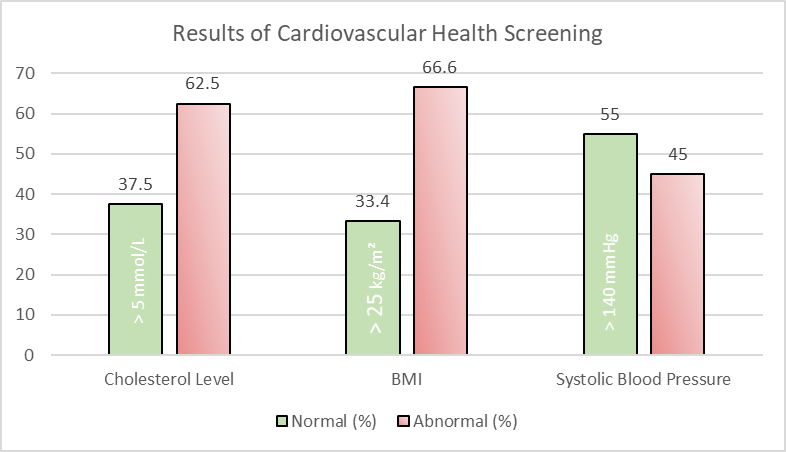
Descriptive statistics were employed to summarise demographic data and baseline health metrics. For prevalence rates, percentages and proportions were calculated for key outcomes, including cholesterol levels exceeding 5.0 mmol/L, BMI above 25 kg/m2, and systolic blood pressure readings over 140 mmHg.
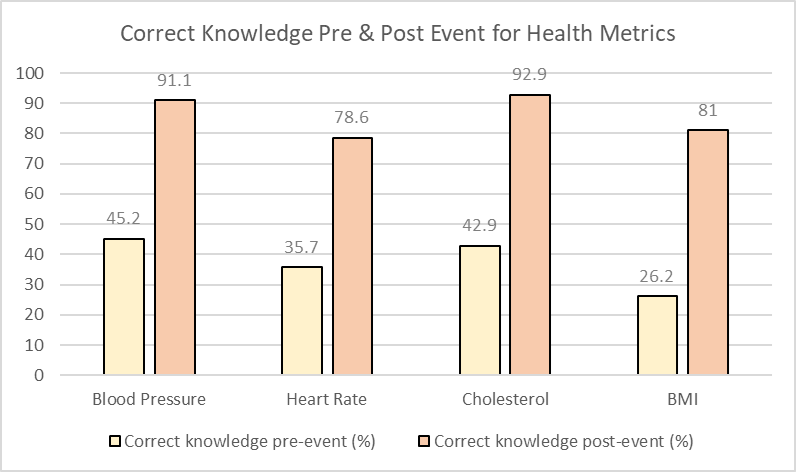
To evaluate changes in participants’ understanding of cardiovascular risk factors post-event, a bespoke survey was used to compare pre- and post-event responses. Missing data from incomplete forms were excluded from the primary analysis.
Results
Data analysis from 48 participants who returned complete forms revealed a significant burden of cardiovascular risk factors within the group. Elevated cholesterol levels were identified in 62.5% of participants, exceeding the threshold of 5.0 mmol/L, while 66.6% were classified as overweight, with a BMI above 25 kg/m2. Nearly half (45%) recorded systolic blood pressure readings above 140 mmHg, highlighting the prevalence of hypertension. Following the screenings, 83.3% of participants were advised to follow up with their general practitioners for further evaluation, particularly for elevated cholesterol and BMI. Post-event surveys demonstrated a 58% increase in participants’ understanding of cardiovascular risk factors, underscoring the educational impact of the initiative.
Discussion
The findings of this study demonstrate the potential of community-based CV screenings to address undiagnosed risk factors and promote health awareness. The significant prevalence of hyperlipidemia, elevated BMI, and hypertension among participants underscores the critical need for accessible and targeted preventive health measures. These results highlight the importance of reaching populations less engaged with traditional healthcare services and proactively addressing modifiable risk factors.
This initiative underscores the indispensable role of nurses and allied health professionals in CVD care. By leveraging their combined expertise in health promotion, risk assessment, and patient education, the team delivered a comprehensive and patient-focused intervention, even within a limited time frame. Allied health professionals, including psychologists, health promotion officers, and physiotherapists, played a vital role in enriching the programme with specialised education on strategies to reduce cardiovascular risk. Together, this multidisciplinary approach highlights the power of collaboration in healthcare, demonstrating how diverse expertise can drive meaningful outcomes in preventive CV care, address the wide-ranging needs of patients, and optimise long-term health outcomes.
The educational impact was also profound, with a 58% increase in participants’ knowledge of CVD risk factors following the event. This highlights the value of integrating health education into screening efforts, empowering individuals with the knowledge to adopt healthier behaviours and take ownership of their CV health.
Despite its successes, the study faced challenges. The short duration of the screening event limited its reach, and incomplete data from 30 participants posed challenges to comprehensive analysis. Future initiatives could benefit from extending the duration of the event. Initiatives like this allow preventive care to be made more accessible and equitable, help reduce the prevalence of undiagnosed risk factors and improve CV outcomes on a population level.
Conclusion
Nurse-led, community-based cardiovascular screening initiatives, supported by allied health professionals, represent a powerful strategy to address the growing burden of CVD. This multidisciplinary approach enhances identifying undiagnosed risk factors and fosters comprehensive health awareness, empowering individuals to take proactive steps toward improving CV health. By leveraging the combined expertise of nurses and allied professionals, these interventions can significantly reduce CVD-related morbidity and mortality. Expanding and replicating such collaborative efforts is essential for improving individual and population health outcomes.
Authors
- Michelle Brennan, Integrated Care Cardiovascular CNS, Waterford, Ireland
- Laura Fennessy, Integrated Care Cardiac Rehab Staff Nurse, Waterford, Ireland
- Norma Caples, Advanced Nurse Practitioner Heart Failure University Hospital, Waterford, Ireland

