In order to bring you the best possible user experience, this site uses Javascript. If you are seeing this message, it is likely that the Javascript option in your browser is disabled. For optimal viewing of this site, please ensure that Javascript is enabled for your browser.
Did you know that your browser is out of date? To get the best experience using our website we recommend that you upgrade to a newer version. Learn more.

Lung ultrasound usefulness in heart failure

Congestion is a main pathophysiological feature of heart failure and the most frequent reason for hospitalisation. Pulmonary congestion can be assessed by lung ultrasound with the same probe used for echocardiography, thus allowing the physician to yield an integrated cardiopulmonary evaluation including structural and functional details of the heart, as well as the presence and the degree of interstitial pulmonary oedema in the same examination. The usefulness of lung ultrasound in heart failure is addressed here, both in out-patients and patients admitted for acute decompensated heart failure, as well as for the differential diagnosis of dyspnoea.

Cardiology
Imaging
Heart Failure

Keywords

B-lines, heart failure, interstitial pulmonary oedema, lung ultrasound, pulmonary congestion


Abbreviation list

HF: heart failure

HFpEF: heart failure with preserved ejection fraction

LUS: lung ultrasound


Take-home messages

  1. Congestion is the main reason for hospitalisation in HF and the main prognostic determinant.
  2. Lung ultrasound B-lines are the sonographic sign of cardiogenic interstitial pulmonary oedema.
  3. Lung ultrasound can be effectively employed across the whole spectrum of HF management, for diagnosis, monitoring and prognosis.
  4. Lung ultrasound should be part of an integrated “cardio-pulmonary ultrasound” approach and must always be integrated with the overall clinical picture of the patient.


Patient-oriented message

Lung ultrasound is a diagnostic test that can support the management of patients through every stage of heart failure (HF) “journey”. It is a very patient-friendly exam for several reasons: it can be done bedside with any echographic machine; it doesn’t use ionising radiation and therefore can be repeated several times; it doesn’t need contrast media and is not invasive. When used for the differential diagnosis of dyspnoea, it can reduce the time needed for the correct diagnosis. When used during HF hospitalisation, lung ultrasound can visualise decongestion and provide information about persistent lung water even when the patient is improving. When used during office visits, it can better guide HF therapy, reducing the number of further hospitalisations for acute decompensated HF.


Introduction

Lung ultrasound (LUS) is a diagnostic test that was historically considered impractical due to the inherent acoustic impedance mismatch caused by air within the lung parenchyma, a well-known obstacle to ultrasound beam propagation. It was initially adopted in emergency settings and intensive care units as part of a point-of-care approach, mainly to rule in or rule out pulmonary oedema in critically ill patients with acute dyspnoea [1]. Its use has now expanded to less acute settings, and the European Guidelines have incorporated LUS as part of the diagnostic workup of new-onset acute heart failure (HF) [2].

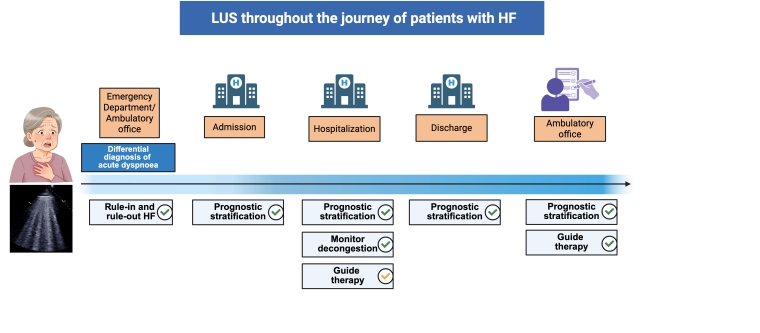
In the context of HF, LUS enables the detection of pulmonary congestion manifesting as interstitial pulmonary oedema, as a consequence of elevated left ventricular filling pressures.  As pulmonary congestion is one of the most relevant pathophysiological features of HF, and the most frequent reason for hospitalisation, LUS offers substantial clinical utility across the whole spectrum of HF management, from diagnosis to monitoring decongestion, guiding therapeutic interventions, and assessing prognosis [3].


Central figure. Lung ultrasound throughout the journey of patients with heart failure.

366_Gargani_central figure.jpeg

HF: heart failure; LUS: lung ultrasound


How to do a lung ultrasound examination

Lung ultrasound in patients with HF is usually done with the same cardiac probe and the same setting of a standard transthoracic echocardiography. The depth can be adjusted, usually within a range of 12-18 cm depending on the patient's size and subcutaneous tissue thickness, to clearly visualise the pleural line. It's recommended to place the focus at the level of the pleural line, although this is not mandatory, especially in critical, time-sensitive situations [3]. The pleural line appears as a bright, horizontal line that moves back and forth in sync with breathing; this movement is referred to as "lung sliding".

The LUS sign of pulmonary interstitial oedema are B-lines : these appear as bright, vertical lines originating from the pleural line, moving in conjunction with lung sliding (Video 1). Because B-lines are a sonographic sign visible in cases of partial deaeration of the lung, an increased number of B-lines typically signifies less air within the underlying lung tissue.


Video 1. Multiple cardiogenic B-lines.


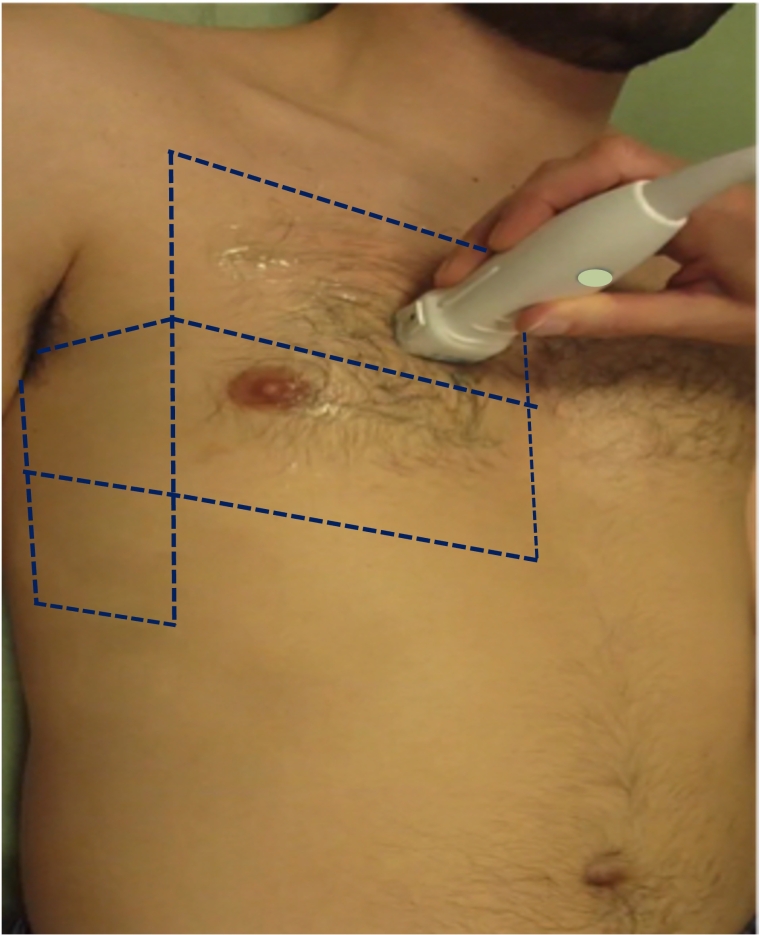
Various LUS scanning schemes have been proposed over the years. The 8-zone scanning method is the most commonly used; this method involves examining four areas on the antero-lateral chest (two anterior and two lateral) on each side of the chest (Figure 1). In patients with HF, LUS is typically performed on the anterolateral chest, avoiding the posterior chest unless the goal is to check for pleural effusion.


Figure 1. The 8-zone scanning method which involves examining four areas on the antero-lateral chest (two anterior and two lateral) on each side of the chest.

366_Gargani_Figure 1.jpg


The ultrasound probe should be moved across the entire chest area, and the image with the most B-lines should be considered the representative view. When there are only a few B-lines (such as 2-3), they can be easily counted individually. However, when B-lines are numerous, as is often seen in pulmonary oedema causing dyspnoea, they tend to merge together, making individual counting difficult. In these cases, the percentage of the area below the pleural line occupied by B-lines should be estimated and then divided by 10. For example, if approximately 70% of the area below the pleural line is filled with B-lines, this would be considered equivalent to 7 B-lines [3]. This “count-based” method allows for a way to quantify or semi-quantify B-lines. While not perfectly precise and subject to some inter- and intra-observer variability, it has proven to be valuable and repeatable. It enables both a dynamic assessment of decongestion during hospitalisation for acute HF and strong prognostic stratification in various clinical scenarios [4-7].

B-lines can also be quantified by a score-based method, which considers a minimum number of B-lines (typically, at least three) in one thoracic zone as a ‘positive’ zone, then, the number of positive zones is added up. The score-based method has been used especially for the differential diagnosis of acute dyspnoea, whereas the count-based method is more useful for assessing decongestion and prognostic stratification; however, both methods have yielded reliable results in various studies.

Lung ultrasound in the diagnosis of heart failure

Acute dyspnoea

Lung ultrasound is of great use in the differential diagnosis of acute dyspnoea [8]. If a patient is experiencing dyspnoea because of pulmonary oedema, the sensitivity of the B-lines is very high; this sensitivity increases as the patient's condition becomes more critical: in these situations, B-lines are usually easily visible in the upper anterior chest [1].

The typical LUS pattern of cardiogenic pulmonary oedema includes multiple, diffuse, bilateral B-lines: multiple is defined as at least 3 B-lines per scanning zone; diffuse is defined as B-lines in at least two scanning zones on a hemithorax, which should be bilateral. These 3 adjectives are relevant because a few isolated B-lines, particularly in gravity-dependent lung regions, can also be observed in individuals without specific medical conditions or may indicate a different underlying pathology.

Lung ultrasound is more sensitive and specific than chest X-rays for detecting pulmonary oedema in patients with suspected acute heart failure [9].  When compared to a standard diagnostic approach that includes chest X-rays and NT-proBNP, LUS offers additional value, particularly by significantly reducing the time needed for an accurate diagnosis: a median of 5 minutes with LUS compared to 90 minutes with chest X-ray and NT-proBNP [8]. This highlights a key advantage of LUS in acute settings: because it's intended as a point-of-care examination performed bedside by the treating physician, its findings are available more rapidly compared to other tests that require additional personnel and equipment.

Clearly, this implies the availability of an ultrasound machine, which can even be a handheld device, and the necessary expertise, for which the time required to achieve proficiency is relatively short [10-11]. In these patients, LUS can also aid by identifying conditions other than HF, such as a pneumothorax or lung consolidations that may indicate pneumonia.

Heart failure with preserved ejection fraction (HFpEF)

Lung ultrasound can be particularly valuable for accelerating the diagnosis of HFpEF. In these cases, cardiac abnormalities on echocardiography may be less obvious, especially in emergency settings that often lack advanced ultrasound equipment. The presence of multiple, diffuse, bilateral B-lines, in a patient with preserved ejection fraction and some structural/functional echocardiographic features, can raise the suspicion for HFpEF before, i.e., natriuretic peptide levels are available.

Cardiogenic versus non-cardiogenic oedema

Lung ultrasound can also be valuable in differentiating between cardiogenic oedema due to HF and non-cardiogenic oedema, such as that seen in acute lung injury (ALI) or acute respiratory distress syndrome (ARDS). While both conditions present with diffuse B-lines, certain features can help distinguish them. Of course, these LUS findings should always be interpreted in the context of the overall clinical picture and other diagnostic information. Table 1 outlines the key differences in LUS findings between cardiogenic and non-cardiogenic B-lines.


Table 1. Different LUS characteristics of cardiogenic and non-cardiogenic B-lines.

      Cardiogenic pulmonary oedema Non-cariogenic pulmonary oedema Pulmonary fibrosis
B-lines

Multiple, diffuse, bilateral

Homogeneous distribution over the chest with a gravity-dependent gradient

Usually separated or coalescent in more severe cases

No spared areas

Multiple, diffuse, often bilateral

Patchy distribution over the chest without a gravity-dependent gradient

More often coaalescent

Spared areas

Multiple but not necessarilly diffuse or bilateral

Usually more prevalent at the lung bases

Usually separated or coalescent in more severe cases

Spared areas not typical

Other LUS findings

Pleural line


Consolidations


Pleural effusion

Usually thin and regular


Usually not present unless compressive atelectasis with large pleural effusion


Frequent, of variable size

Anechoic (transudate), without complex appearance unless coexisting conditions

Usually bilateral (often larger on the right side)

Usually irregular and “fragmented”


Frequent peripheral small consolidations and larger consolidations


Usually not large

Irregular in moderate/severe cases (can appear thin in mild cases)


Consolidations rarely present; can be seen in acute phases (i.e. alveolitis), usually of small size


Rare, unless in very advanced cases or acute phases; usually not large

LUS: lung ultrasound


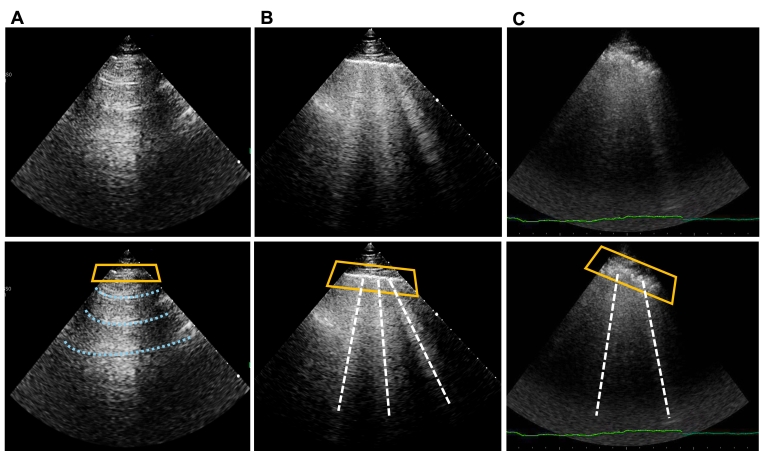
Figure 2. Cardiogenic and non-cardiogenic B-lines.

A) A normal LUS pattern with normal pleural line (yellow box) and A-lines (light-blue dotted lines).  B) Cardiogenic B lines (white dotted lines) with a normal pleural line (yellow box). C) Non-cardiogenic B lines due to pulmonary fibrosis (white dotted lines) with an irregular pleural line (yellow box).

366_Gargani_Figure 2.jpg

LUS: lung ultrasound


Lung ultrasound for monitoring decongestion in acute heart failure

B-lines can change rapidly, as shown by their appearance during exercise [7] or real-time during lung lavage [12], as well as their decrease/disappearance during dialysis. Therefore, LUS is a useful tool for monitoring decongestion during treatment for acute HF [13].

Effective decongestion, as indicated by a reduction in the percentage or absolute number of B-lines, has also demonstrated prognostic significance. Patients with no B-lines at hospital discharge or with at least a 50% reduction in B-lines experienced fewer adverse events, such as rehospitalisation for HF, during follow-up [14, 15]. However, these findings are based on relatively small, single-centre studies.

One advantage of B-lines compared to echocardiographic parameters, particularly non-invasive haemodynamic measures like E/e' and pulmonary artery systolic pressure, is their very dynamic nature, since a significant decrease in the number of B-lines can be observed even within minutes after starting appropriate treatment.

Lung ultrasound to guide therapy in acute and chronic heart failure

Currently, robust evidence in support of LUS-guided therapy’s capacity to improve prognosis in patients with acute HF is limited [15, 16, 17]. However, some promising preliminary findings from small, single-centre studies suggest that using LUS to guide diuretic therapy in patients with acute HF may lead to improvements in outcome.

Specifically, LUS-guided treatment was linked to fewer 90-day readmissions for acute HF and longer times until readmission compared to standard care, without significant differences in safety outcomes such as acute kidney injury, hypokalaemia, or hypotension [16].

In patients with chronic HF, some randomised trials have shown that a strategy including LUS-guided treatment – mostly for diuretic therapy – can lead to a reduction in urgent visits for HF [18] and rehospitalisations for acute HF [19].

Lung ultrasound to assess prognosis

Lung ultrasound B-lines have shown to be strong prognosticators in many different settings. They predict worse outcomes, mostly in terms of rehospitalisation for HF, both if assessed at admission [5] and at discharge [4]. This is valid both in patients with HFrEF and HFpEF, irrespective of signs and symptoms of HF [5].

The European Society of Cardiology (ESC)  Guidelines also emphasise the importance of identifying even subtle pulmonary congestion at the time of hospital discharge. This is because it's well established that patients who still have some degree of lung congestion before going home are more likely to be readmitted in the following weeks.

This prognostic value has also been demonstrated in patients with acute coronary syndromes [20], where B-lines can be a component of a "sonographic" Forrester classification: the time-velocity integral of the left ventricular outflow tract, used to non-invasively determine stroke volume, can serve as an indicator of perfusion, whereas B-lines can serve as an indicator of congestion. Table 2 provides a summary of the clinical situations in which lung ultrasound can aid in the management of patients with HF.


Table 2. Usefulness of lung ultrasound during the management of HF patients.

TIME Use of LUS

DIAGNOSIS

  • In-patients


  • Out-patients


Rule in and rule out cardiogenic pulmonary oedema in patients with acute dyspnoea (multiple, diffuse, bilateral B-lines).

Reduce time to correct diagnosis.

Not inferior in diagnostic accuracy compared to standard strategy (chest X-ray+NT-proBNP).


Detect subclinical pulmonary congestion in out-patients with HF and no significant signs and symptoms.

MONITORING

  • In-patients


Dynamic monitoring of decongestion during hospitalisation for acute HF, through reduction of B-lines.

GUIDING THERAPY


  • Out-patients

Titrate HF treatment (in particular diuretic therapy) according also to the number of B-lines during follow-up in out-patients after HF admission, to reduce the number of urgent visits and rehospitalisation for acute HF.

PROGNOSIS

  • In-patients


  • Out-patients


Detection of subclinical pulmonary congestion at discharge to predict rehospitalisation.


Detection of subclinical pulmonary congestion during ambulatory office visits to predict rehospitalisation.

HF: heart failure; LUS: lung ultrasound


Integrated cardiopulmonary ultrasound in heart failure

Lung ultrasound should be considered as part of an integrated cardiopulmonary ultrasound assessment. This would make the technique particularly powerful for cardiologists who can perform both exams together. The information gained from these two evaluations is complementary: echocardiography provides details about the underlying causes of HF, while B-lines provide information about the presence of decompensation and allow for a semi-quantification of the degree of pulmonary congestion.

We have echocardiographic data, particularly related to non-invasive haemodynamic assessment – such as E/e', pulmonary artery systolic pressure, or the severity of functional mitral and tricuspid regurgitation – that can certainly add to our understanding of the degree of decompensation. However, B-lines are typically more dynamic than these parameters. When a patient is in a compensated state, very few, if any, B-lines are visible. In contrast, echocardiographic parameters in a "compensated" patient can still be clearly abnormal, similar to what can be seen with NT-proBNP levels (the concept of "dry" NT-proBNP value).

Compared to inferior vena cava evaluation, B-lines have the advantage of representing only pulmonary oedema, whereas inferior vena cava integrates information about right atrial pressure with volemic status; this makes the simultaneous assessment of these parameters particularly informative and additive.

Lung ultrasound beyond B-lines

Lung ultrasound can be considered as a densitometer of the lung; therefore, it can assess other lung abnormalities if they are characterised by decreased air content (deaeration). An increase in air content cannot be seen at LUS; thus, a patient, i.e., with a severe chronic obstructive pulmonary disease would have an LUS examination very similar to a normal subject.

  • Lung ultrasound can detect pulmonary consolidations with good sensitivity, particularly when they are located near the surface of the lung. Sensitivity approaches 100% for consolidations that are in contact with the pleural line. Therefore, in a patient with dyspnoea, LUS can detect a consolidation due to pneumonia as well as a pattern of interstitial pneumonia or a pleural effusion with compression atelectasis. Some features can also help in differentiating the different types of consolidations, such as:
    • Pneumonia (hypoechoic or tissue-like appearance, usually with blurred margins and visible air bronchogram).
    • Obstructive atelectasis (tissue-like appearance, with well-defined margins and no air bronchogram).
    • Compression atelectasis (tissue-like pulmonary parenchyma surrounded by pleural effusion in a quantity that is deemed sufficient to compress the pulmonary parenchyma); compression atelectasis is frequently seen in patients with HF and large pleural effusions and can be a predisposing condition for pulmonary superinfections.
    • Pulmonary infarctions in the context of pulmonary embolism (triangular/polygonal hypoechoic peripheral consolidations with sharp margins).
  • Lung ultrasound is also able to detect pneumothorax (PNX), which is characterised by an absence of lung sliding and an absence of B-lines. Rapid bedside suspicion of PNX using LUS is very valuable. Pneumothorax can not only be a cause of acute dyspnoea in outpatients but can also occur as a complication of some medical procedures, such as central venous line placement, thoracentesis, and positive pressure ventilation. Unless the patient is haemodynamically unstable, confirmation with a chest X-ray or chest CT scan is recommended.
  • Pleural effusion is another important condition that can be effectively evaluated with LUS. It is frequently present in patients with HF and can provide insights into the timeline of decompensation, as pleural effusion typically develops more slowly than interstitial pulmonary oedema. The appearance of the pleural effusion can also provide information about its aetiology: HF-related effusions are usually transudates and therefore appear anechoic. Complex or corpusculated pleural effusions are often due to other conditions, which may even overlap with HF, such as cancer-related or infectious processes.

Limitations

Although it is a very useful support in the management of patients with HF, LUS should not be used in isolation to infer conclusions about a patient’s condition, except in critical situations, where the LUS findings are clear enough to confidently rule in or rule out cardiogenic pulmonary oedema with very high accuracy.

There are inherent limitations to this method because B-lines are ultimately artefacts and not direct anatomical images. Furthermore, B-lines are not a specific sign of cardiogenic pulmonary interstitial oedema, but a sonographic sign of partial deaeration of the pulmonary parenchyma and will therefore be present in cardiogenic pulmonary interstitial oedema, as well as in other conditions affecting the lung interstitium, such as non-cardiogenic oedema, pulmonary fibrosis, and interstitial pneumonia. There are some characteristics that may help to distinguish the different types of B-lines (Table 1), but still this differential diagnosis should not be done solely on LUS findings.

Assessment of B-lines and pleural effusion is mostly effective when coupled with echocardiography and, whenever possible, with venous excess ultrasound. This would allow  for the concurrent evaluation in one patient of haemodynamic, pulmonary and venous congestion, which can have different behaviours and decongestive timing, also considering that signs and symptoms of HF are not only due to fluid accumulation but also to fluid redistribution.

There is still some lack of standardisation in scanning schemes and quantification methods: however, the 8-zone scanning scheme is currently the most frequently used in HF, and quantification/semi-quantification is usually done with score-based or count-based methods, as highlighted above.

Intra- and inter-observer variability is another potential limitation: however, it should be emphasised that in acute patients with significant interstitial pulmonary oedema, the LUS picture will be clear and the rule in or rule out usually straightforward; on the other hand, to assess the effectiveness of decongestion we should not rely on small decreases in the number of B-lines, as such minor changes may fall within the range of inter-observer variability.

Conclusions

Lung ultrasound has entered the clinical arena in recent years, especially for the differential diagnosis of acute dyspnoea/respiratory failure.

In patients with HF, LUS allows detection and quantification/semi-quantification of B-lines, the sonographic sign of pulmonary interstitial oedema. B-line assessment can support the clinician throughout the whole journey of a patient with HF, from diagnosis to decongestion monitoring, from guiding therapy to prognostic stratification.

Lung ultrasound is a relatively simple technique that yields a significant amount of information with just a brief extension of the standard cardiac ultrasound examination. When combined with cardiac ultrasound, it enables a powerful integration of clinical and ultrasound findings for a comprehensive cardiopulmonary assessment. As a point-of-care tool, it represents the quintessential "clinical" ultrasound application.

References


  1. Lichtenstein DA, Mezière GA. Relevance of lung ultrasound in the diagnosis of acute respiratory failure: the BLUE protocol. Chest. 2008;134:117–25. 
  2. McDonagh TA, Metra M, Adamo M, Gardner RS, Baumbach A, Böhm M, Burri H, Butler J, Čelutkienė J, Chioncel O, Cleland JGF, Coats AJS, Crespo-Leiro MG, Farmakis D, Gilard M, Heymans S, Hoes AW, Jaarsma T, Jankowska EA, Lainscak M, Lam CSP, Lyon AR, McMurray JJV, Mebazaa A, Mindham R, Muneretto C, Francesco Piepoli M, Price S, Rosano GMC, Ruschitzka F, Kathrine Skibelund A; ESC Scientific Document Group. 2021 ESC Guidelines for the diagnosis and treatment of acute and chronic heart failure. Eur Heart J. 2021;42:3599–726. 
  3. Gargani L, Girerd N, Platz E, Pellicori P, Stankovic I, Palazzuoli A, Pivetta E, Miglioranza MH, Soliman-Aboumarie H, Agricola E, Volpicelli G, Price S, Donal E, Cosyns B, Neskovic AN; This document was reviewed by members of the 2020–2022 EACVI Scientific Documents Committee. Lung ultrasound in acute and chronic heart failure: a clinical consensus statement of the European Association of Cardiovascular Imaging (EACVI). Eur Heart J Cardiovasc Imaging. 2023 Nov 23;24(12):1569-1582. 
  4. Gargani L, Pang PSS, Frassi F, Miglioranza MH, Dini FLL, Landi P, Picano E. Persistent pulmonary congestion before discharge predicts rehospitalization in heart failure: a lung ultrasound study. Cardiovasc Ultrasound. 2015;13:40. 
  5. Gargani L, Pugliese NR, Frassi F, Frumento P, Poggianti E, Mazzola M, De Biase N, Landi P, Masi S, Taddei S, Pang PS, Sicari R. Prognostic value of lung ultrasound in patients hospitalized for heart disease irrespective of symptoms and ejection fraction. ESC Heart Fail. 2021;8:2660–9. 
  6. Zoccali C, Torino C, Tripepi R, Tripepi G, D'Arrigo G, Postorino M, Gargani L, Sicari R, Picano E, Mallamaci F; Lung US in CKD Working Group. Pulmonary congestion predicts cardiac events and mortality in ESRD. J Am Soc Nephrol. 2013;24:639-46. 
  7. Simonovic D, Coiro S, Deljanin-Ilic M, Kobayashi M, Carluccio E, Girerd N, Ambrosio G. Exercise-induced B-lines in heart failure with preserved ejection fraction occur along with diastolic function worsening. ESC Heart Fail. 2021;8:5068-80. 
  8. Pivetta E, Goffi A, Nazerian P, Castagno D, Tozzetti C, Tizzani P, Porrino G, Ferreri E, Busso V, Morello F, Paglieri C, Masoero M, Cassine E, Bovaro F, Grifoni S, Maule MM, Lupia E; Study Group on Lung Ultrasound from the Molinette and Careggi Hospitals. Lung ultrasound integrated with clinical assessment for the diagnosis of acute decompensated heart failure in the emergency department: a randomized controlled trial. Eur J Heart Fail. 2019; 21:754–66. 
  9. Chiu L, Jairam MP, Chow R, Chiu N, Shen M, Alhassan A, Lo CH, Chen A, Kennel PJ, Poterucha TJ, Topkara VK. Meta-analysis of point-of-care lung ultrasonography versus chest radiography in adults with symptoms of acute decompensated heart failure. Am J Cardiol. 2022;174:89–95. 
  10. Bedetti G, Gargani L, Corbisiero A, Frassi F, Poggianti E, Mottola G. Evaluation of ultrasound lung comets by hand-held echocardiography. Cardiovasc Ultrasound. 2006;4:34. 
  11. Mousa A, Plantinga C, Blok SG, Mulder R, Boer SD, Cox LAE, Dormans T, Kuindersma M, Scholten H, Schultz MJ, Smit MR, Bos LDJ, Paulus F, Tuinman PR. Targeted, Condensed Lung Ultrasound Training Program for Image Interpretation: A Prospective Multicenter Observational Study in Intensive Care Unit Professionals. Ultrasound Med Biol. 2025:S0301-5629(25)00083-3. 
  12. Via G, Lichtenstein D, Mojoli F, Rodi G, Neri L, Storti E, Klersy C, Iotti G, Braschi A. Whole lung lavage: a unique model for ultrasound assessment of lung aeration changes. Intensive Care Med. 2010;36:999-1007. 
  13. Volpicelli G, Caramello V, Cardinale L, Mussa A, Bar F, Frascisco MF. Bedside ultrasound of the lung for the monitoring of acute decompensated heart failure. Am J Emerg Med. 2008;26:585–91. 
  14. Pugliese NR, Mazzola M, Bandini G, Barbieri G, Spinelli S, De Biase N, Masi S, Moggi Pignone A, Ghiadoni L, Taddei S, Sicari R, Pang PS, De Carlo M, Gargani L. Prognostic Role of Sonographic Decongestion in Patients with Acute Heart Failure with Reduced and Preserved Ejection Fraction: A Multicentre Study. J Clin Med. 2023;12:773. 
  15. Öhman J, Harjola VP, Karjalainen P, Lassus J. Focused echocardiography and lung ultrasound protocol for guiding treatment in acute heart failure. ESC Heart Fail. 2018;5:120-28. 
  16. Kashoob M, Al-Busaidi S, Al-Maqbali JS, Al-Badi A, Aalhamad A, Falahi ZA, Huraizi AA, Farhan HA, Zeedy KA, Hashim AHA, Al-Ghailani MH, Shoaib M, Bingawi HE, Al Alawi AM. LUDT-ADHF trial: Lung ultrasound-guided diuretic therapy for hospitalized patients with acute decompensated heart failure: An open-label clinical trial. Heart Lung. 2025;69:155-62. 
  17. Pang PS, Russell FM, Ehrman R, Ferre R, Gargani L, Levy PD, Noble V, Lane KA, Li X, Collins SP. Lung Ultrasound-Guided Emergency Department Management of Acute Heart Failure (BLUSHED-AHF): A Randomized Controlled Pilot Trial. JACC Heart Fail. 2021;9:638-648. 
  18. Rivas-Lasarte M, Álvarez-García J, Fernández-Martínez J, Maestro A, López-López L, Solé-González E, Pirla MJ, Mesado N, Mirabet S, Fluvià P, Brossa V, Sionis A, Roig E, Cinca J. Lung ultrasound-guided treatment in ambulatory patients with heart failure: a randomized controlled clinical trial (LUS-HF study). Eur J Heart Fail. 2019;21:1605-13. 
  19. Marini C, Fragasso G, Italia L, Sisakian H, Tufaro V, Ingallina G, Stella S, Ancona F, Loiacono F, Innelli P, Costantino MF, Sahakyan L, Gabrielyan S, Avetisyan M, Margonato A, Agricola E. Lung ultrasound-guided therapy reduces acute decompensation events in chronic heart failure. Heart. 2020;106:1934-9. 
  20. Carreras-Mora J, Vidal-Burdeus M, Rodríguez-González C, Simón-Ramón C, Rodríguez-Sotelo L, Sionis A, Giralt-Borrell T, Martínez-Membrive MJ, Izquierdo-Marquisá A, Farré N, Cainzos-Achirica M, Tizón-Marcos H, García-Picart J, Milà-Pascual L, Vaquerizo-Montilla B, Rivas-Lasarte M, Ribas-Barquet N. Lung Ultrasound in the Acute Phase of ST-Segment-Elevation Acute Myocardial Infarction: 1-Year Prognosis and Improvement in Risk Prediction. J Am Heart Assoc. 2024;13:e035688. 

Notes to editor


Authors:

Luna Gargani, MD, PhD; Matteo Mazzola, MD


Affiliations:

Department of Surgical, Medical and Molecular Pathology and Critical Care Medicine, University of Pisa, Pisa, Italy


Address for correspondence:

Dr Luna Gargani, piazza Dante Alighieri, 2 – 56126, Pisa, Italy.

Email: luna.gargani@unipi.it

X: @lunagargani


Author disclosures:

Dr. Luna Gargani has received consulting honoraria from Caption Health, GE Healthcare, SANOFI outside of this work.

Dr. Matteo Mazzola has no conflict of interest to declare.


The content of this article reflects the personal opinion of the author/s and is not necessarily the official position of the European Society of Cardiology.